
Buying Guides
Common Spare Tire Cover Installation Mistakes: 5 Proven Ways to Avoid Them
May
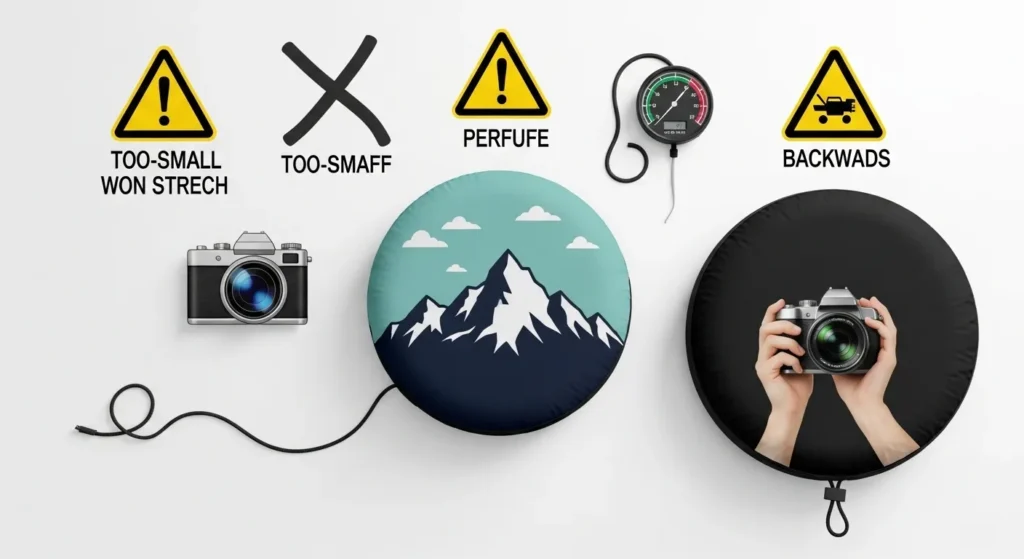
Most spare tire cover installation mistakes do not come from a defective product or a difficult process — they come from small, avoidable errors that happen in the two minutes before the drawcord is tightened. Understanding these mistakes before you install means you only have to do it right once.
This guide covers the five most common spare tire cover installation mistakes, explains why each one happens, and shows you exactly how to avoid every one of them for a clean, secure installation that stays in place for years.
Why Spare Tire Cover Installation Mistakes Are So Common
Spare tire covers look simple — and they are, once you know what to watch for. But because the installation process appears so straightforward, most buyers skip preparation entirely and go straight to pulling the cover over the tire. That is where the mistakes begin.
The five spare tire cover installation mistakes covered in this guide are responsible for the vast majority of covers that flap at highway speeds, block backup cameras, wear out prematurely, or look crooked and unprofessional after installation. None of them require special skills to avoid — they only require knowing what they are.
Spare Tire Cover Installation Mistake #1: Choosing the Wrong Size
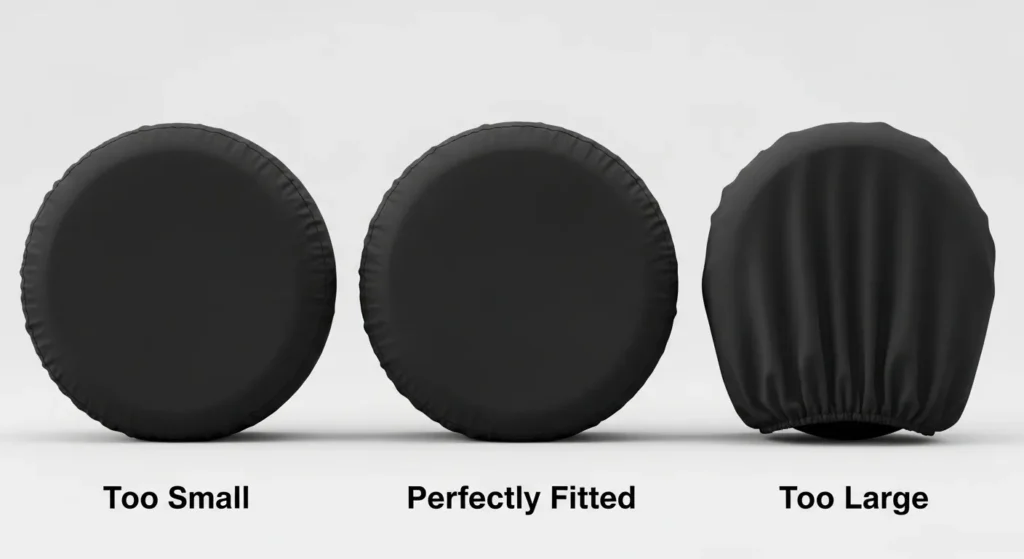
This is the most consequential of all spare tire cover installation mistakes because it cannot be corrected by installation technique. A cover that is the wrong size will never install correctly, regardless of how carefully you follow every other step.
What Happens When the Cover Is Too Small
A cover one inch too small will be extremely difficult to pull over the tire. The fabric will stretch under tension, the drawcord opening will pull tight before the cover is fully on, and the entire installation will feel like a battle. Forcing an undersized cover onto a tire risks tearing the fabric at the edges or breaking the drawcord channel — and a cover that is stretched under constant tension will wear out significantly faster than a correctly sized one.
What Happens When the Cover Is Too Large
A cover two or more inches too large will sag and droop regardless of how firmly the drawcord is tightened. The face of the cover will wrinkle, the bottom edge will hang below the tire, and the cover will shift and rotate during driving. Even the sharpest custom design looks poor on a sagging, loose cover.
How to Avoid This Mistake
Measure your tire’s overall diameter before ordering — not after. Read the sidewall code and enter it into a free online tire size calculator, or measure directly across the center of the tire from tread edge to tread edge. Choose the cover size that matches your measurement. If between two sizes, go with the larger option. Never guess.
Because most spare tire covers are custom-made to order, incorrect size selection is not eligible for return or exchange. Getting the size right before ordering is the only protection against this mistake.
Spare Tire Cover Installation Mistake #2: Installing Upside Down or Backwards
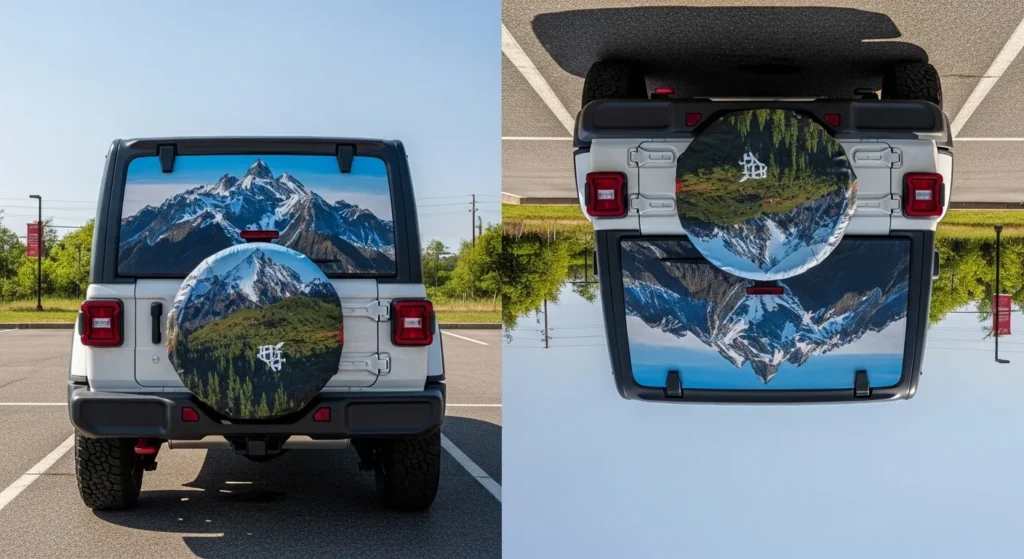
Spare tire covers look similar on both sides, which makes this one of the more embarrassing spare tire cover installation mistakes — and one of the more common ones. Installing a cover upside down or with the face toward the vehicle rather than away from it creates several problems depending on the cover design.
Why This Happens
Covers are typically pulled over the tire quickly without examining orientation first. On covers with symmetrical designs, the error may not be visible until the drawcord is tightened — at which point the design is oriented incorrectly or the camera hole is in the wrong position relative to the lens.
Specific Consequences
- Design faces the wrong direction: Text reads upside down, landscapes are inverted, or directional images look wrong from the outside
- Camera hole misalignment: If the hole is positioned at a fixed location on the cover, installing upside down places it at the bottom of the tire instead of the center — completely blocking camera function even though the hole exists
- Drawcord faces outward: If the cover is installed backwards, the drawcord opening is visible from the outside rather than tucked against the back of the tire
How to Avoid This Mistake
Before pulling the cover over the tire, hold it up and orient it correctly. The face (design side) should face away from the vehicle. The drawcord opening should face toward the vehicle. If the cover has a camera hole, it should be centered at the position that will align with your lens. Take five seconds to confirm orientation before starting — this cannot be corrected easily once the cover is on.
Spare Tire Cover Installation Mistake #3: Misaligning the Camera Hole
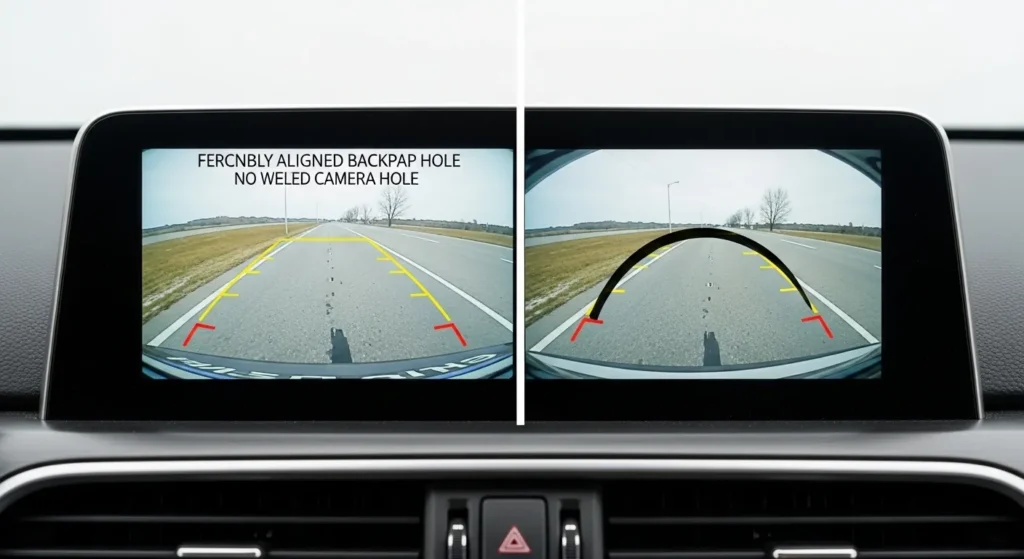
For vehicles with rear-mounted backup cameras positioned through the spare tire, this is one of the most impactful spare tire cover installation mistakes — because it renders the camera partially or completely non-functional.
How Misalignment Happens
The most common cause is tightening the drawcord before checking camera alignment. The cover looks roughly centered during installation, the drawcord is pulled tight, and only afterward — when backing up and checking the camera — does the driver notice the image is blocked or distorted by the edge of the hole.
The second cause is rushing the installation and not pausing to visually confirm lens visibility through the hole before securing the cover.
What a Misaligned Camera Hole Looks Like in Practice
A partially misaligned hole produces a camera image with a dark arc or crescent along one edge. A fully misaligned hole covers the lens completely, producing a black screen. Neither situation is acceptable for daily driving.
How to Avoid This Mistake
After positioning the cover over the tire but before tightening the drawcord, stand directly behind the vehicle and look at the camera hole. The lens should be clearly visible and centered within the opening. If it is not, rotate or shift the cover slightly until the lens is centered, then tighten the drawcord. After tightening, activate your reverse camera to confirm a clear, centered image before calling the installation complete.
Spare Tire Cover Installation Mistake #4: Not Tightening the Drawcord Enough
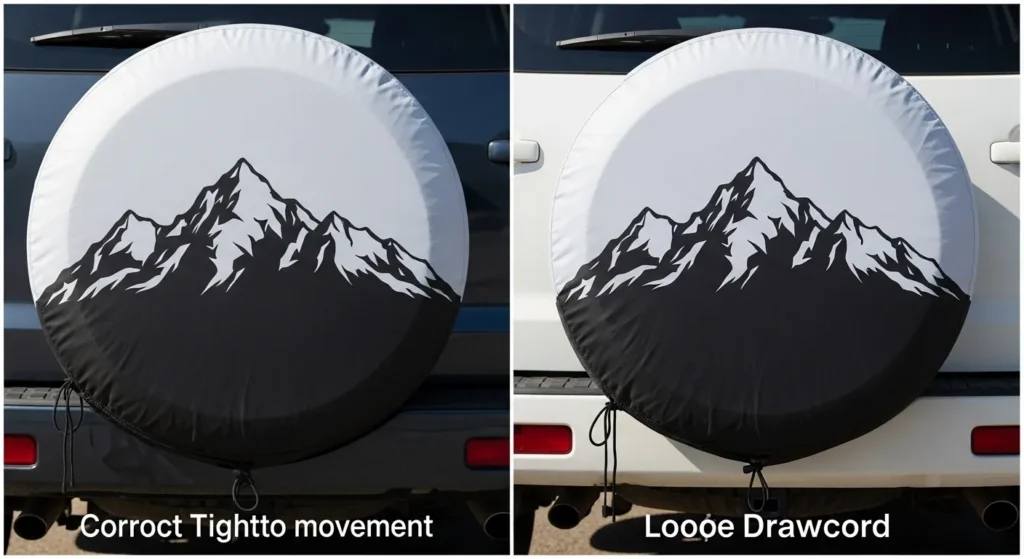
Of all the spare tire cover installation mistakes, this is the one that most often reveals itself after the fact — on the highway, at speed, when a loose cover begins to flap audibly against the tire.
Why Insufficient Drawcord Tension Is So Common
The drawcord needs to be pulled noticeably tighter than feels necessary during installation. Many buyers pull the cord until it feels snug, then tie it off — not realizing that vibration, wind pressure, and normal driving will loosen a cord that is merely snug within a short period. By the time they notice the cover shifting or flapping, the drawcord has already worked itself loose from the initial tension.
What Insufficient Tension Causes
- Cover rotates slowly out of position during driving, eventually sitting off-center
- Flapping at highway speeds — both audibly distracting and accelerating fabric wear
- Progressive loosening over time as the cord relaxes further
- Camera hole drifts out of alignment with the lens
How to Avoid This Mistake
Pull the drawcord until the cover is firm and taut all the way around the tire — tighter than you think is necessary. The fabric should not flex or shift when pushed at the edges. Tie a secure knot rather than a simple loop, and tuck the loose ends into the drawcord channel so they cannot vibrate free. When in doubt, pull harder and re-tie.
Spare Tire Cover Installation Mistake #5: Installing on a Flat or Underinflated Tire
This is the least obvious of the spare tire cover installation mistakes and often the hardest to diagnose — because the cover appears to install perfectly on a flat tire, only to become too tight once the tire is properly inflated.
Why This Matters
A spare tire that is significantly underinflated has a noticeably smaller diameter than when inflated to its recommended pressure. A cover selected and installed based on the deflated tire diameter may be one full size too small for the properly inflated tire. The cover that installed with no difficulty on the flat spare will feel tight and strained — or may not fit at all — once the tire is inflated.
The Practical Consequence
Many people store their spare in a partially deflated state, measure or fit-test the cover on that deflated spare, and only discover the problem during an emergency when they inflate the tire and need to reinstall the cover roadside. This is exactly the wrong time to discover the cover no longer fits.
How to Avoid This Mistake
Always inflate your spare to the recommended pressure before installing or sizing the cover. Check the tire pressure label on the inside of your driver’s door or in your owner’s manual. Inflate to the specified PSI, then install the cover. The few minutes this takes prevents both sizing errors and installation problems.
Quick Reference: All 5 Mistakes and Their Fixes
| Mistake | What It Causes | How to Avoid It |
|---|---|---|
| Wrong size cover | Cannot install, or sags badly | Measure tire diameter before ordering |
| Installing upside down or backwards | Design inverted, camera hole wrong position | Orient cover correctly before pulling it on |
| Misaligning camera hole | Camera blocked or distorted | Check lens visibility before tightening drawcord |
| Drawcord not tight enough | Cover flaps, rotates, loosens over time | Pull tighter than feels necessary, tie securely |
| Installing on flat tire | Cover too tight once tire is inflated | Inflate spare to correct PSI before installing |
Frequently Asked Questions
What Is the Most Common Spare Tire Cover Installation Mistake?
Insufficient drawcord tension is the most frequently reported installation issue — it is the primary reason covers shift, rotate, and flap during driving. However, choosing the wrong size before ordering is the most consequential mistake because it cannot be corrected after the fact, especially for custom-made covers that are not eligible for return.
My Cover Installed Fine but Now Sits Off-Center. What Happened?
The most likely cause is a drawcord that was not tightened firmly enough at installation. Wind pressure and vehicle vibration have gradually loosened the cord over time, allowing the cover to rotate. Remove the cover, reposition it correctly, and re-tighten the drawcord significantly more than before. Tie a secure knot rather than a loose loop.
Can I Reinstall a Spare Tire Cover Multiple Times?
Yes — spare tire covers are designed for repeated removal and reinstallation. The drawcord and fabric are built to withstand regular on-and-off cycles. Removing the cover to clean it, inspect the tire, or store the vehicle is normal and does not reduce the cover’s lifespan as long as the installation process is followed correctly each time.
My Camera Worked Before I Installed the Cover. Now It Shows a Dark Edge. What’s Wrong?
The camera hole is slightly misaligned with the lens. The edge of the hole is partially covering the camera, creating the dark arc you see in the image. Loosen the drawcord, shift the cover slightly in the direction away from the dark area until the lens is centered in the hole, then re-tighten. Activate the camera to confirm the image is clear and fully centered before considering installation complete.
Where This Fits in the Complete Installation and Maintenance Guide
Avoiding spare tire cover installation mistakes is the foundation of a successful install — but knowing how to clean the cover properly, maintain it over time, and recognize when to replace it keeps it performing for years. These spare tire cover installation mistakes are easy to avoid once you know them. All maintenance topics are covered in full in the complete guide below.
👉 How to Install and Maintain a Spare Tire Cover — Complete Guide
For tire pressure standards and vehicle safety specifications, refer to the NHTSA tire safety guidelines — the official U.S. government resource for tire maintenance and vehicle safety.
Ready to order the right cover for your spare tire? Browse our full collection of custom spare tire covers, available in sizes 27″–35″ for Jeep, SUV, RV, and trailer owners.