
Buying Guides
Spare Tire Cover Size Mistakes: 5 Proven Ways to Avoid the Wrong Fit
Jun
Ordering a spare tire cover should be simple — but spare tire cover size mistakes are surprisingly common, and most of them are completely avoidable. The problem is that many buyers don’t realize they’ve made an error until the cover arrives and doesn’t fit.
Because spare tire covers are custom-made to order, incorrect size selection is typically not eligible for return or exchange. That makes getting it right the first time essential. In this guide, we’ll walk through the five most critical spare tire cover size mistakes, explain why each one happens, and show you exactly how to avoid them.
Why Spare Tire Cover Size Mistakes Are So Common
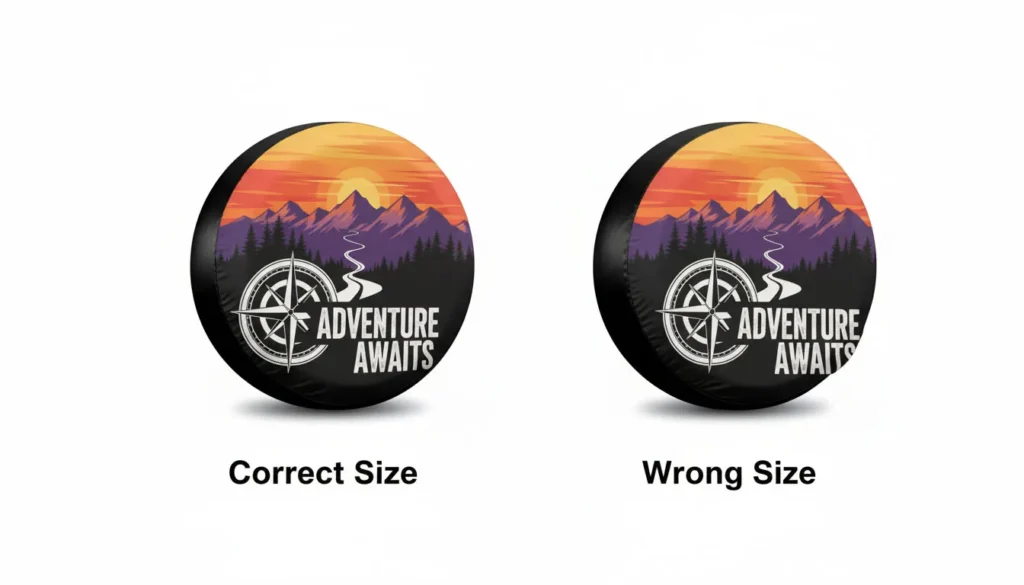
Most sizing errors come down to one root cause: buyers assume they already know their tire size without verifying it. Spare tire sizing is based on the overall diameter of the tire — not the wheel, not the rim, and not the vehicle model. Even experienced vehicle owners frequently confuse these measurements.
A cover that’s one inch too small won’t go on without a fight — or at all. A cover that’s one inch too large will sag, wrinkle, and flap in the wind. Neither outcome is acceptable, especially for a custom-printed product. Understanding where these spare tire cover size mistakes originate is the first step to avoiding them.
Mistake #1: Using Wheel Size Instead of Tire Diameter
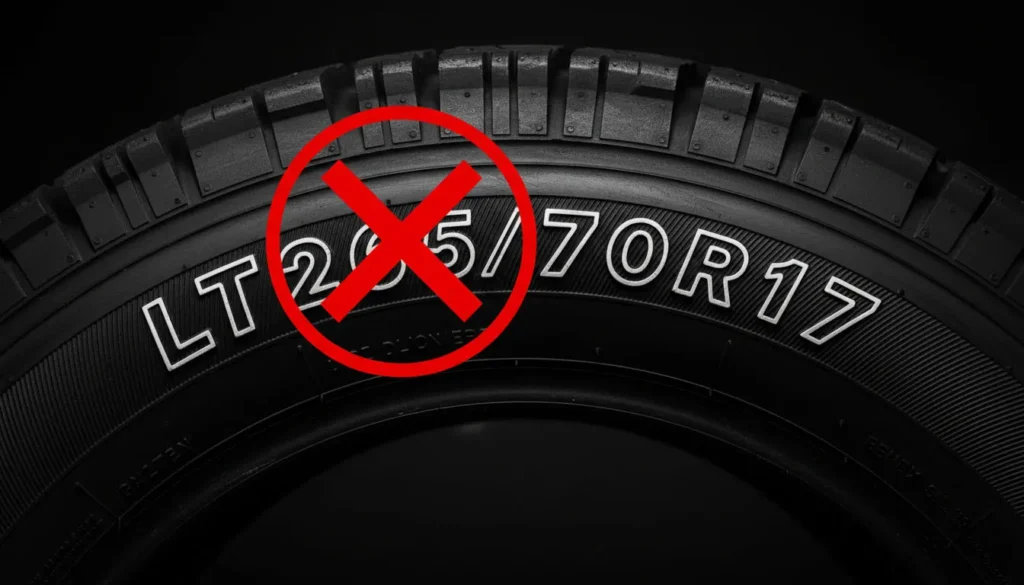
This is the single most common spare tire cover size mistake — and it catches even experienced buyers off guard.
When you look at the sidewall of your tire, you’ll see a code like LT265/70R17. The “17” at the end refers to the wheel diameter — the size of the metal rim. Many buyers see this number and assume they need a 17-inch spare tire cover.
This is incorrect. A 17-inch wheel can be paired with tires that range from 28 inches to 34 inches in overall diameter. The wheel size tells you nothing about which cover size you need.
How to avoid it: Always calculate the full tire diameter using the complete sidewall code. Enter the code into a free online tire size calculator to get the overall diameter in inches. That number — not the wheel size — determines your spare tire cover size.
Mistake #2: Guessing Instead of Measuring
Visual estimates are unreliable. Two tires can look almost identical at a glance but differ by one or even two inches in actual diameter. This is especially true when comparing tires from different brands, tread patterns, or aspect ratios.
Buyers often think: “I had a 33-inch tire before, so this one must be the same.” But if they’ve upgraded, changed brands, or switched from street to off-road tires, the actual size may be different — sometimes significantly.
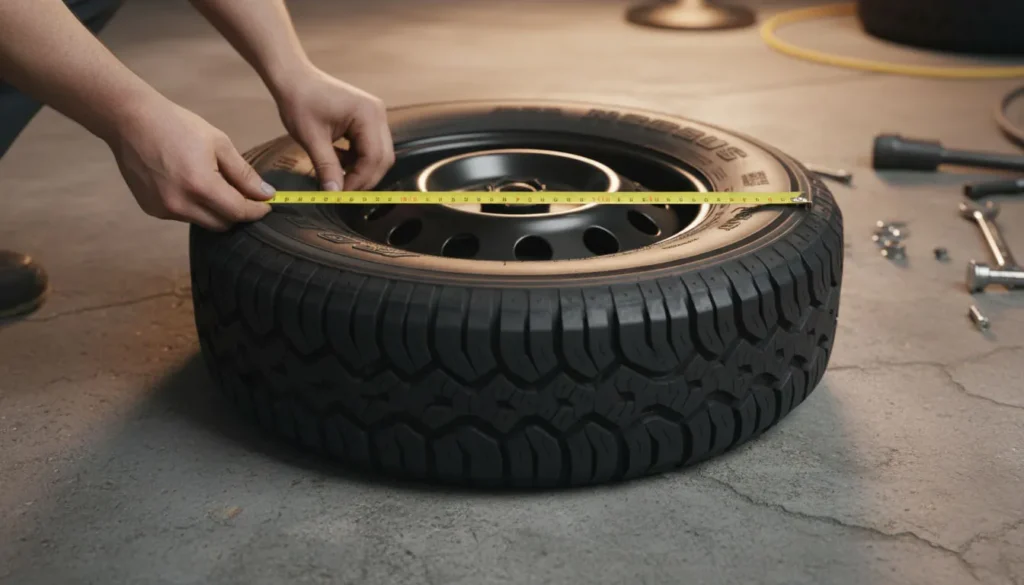
How to avoid it: Always measure your spare tire before ordering — even if you’ve owned similar tires before. Use a flexible tape measure and measure straight across the tire from edge to edge, including the tread but not the rim. Or read the sidewall code and use a calculator. Either method takes less than two minutes and eliminates this spare tire cover size mistake entirely.
Mistake #3: Choosing a Smaller Size for a “Tight Fit”
Some buyers deliberately choose a smaller spare tire cover, assuming a tighter fit means better security. This logic seems reasonable — but it leads to a series of real problems.
A cover that’s too small is difficult to install and may not fit over the tire at all. If you do manage to force it on, the excess tension strains the fabric at the edges and around the drawcord. Over time, this causes premature wear, tearing, and failure of the closure system.
A snug fit is good. A tight fit is not. There is an important difference between the two, and confusing them is one of the most damaging spare tire cover size mistakes you can make.
How to avoid it: If your measurement falls between two sizes, always choose the larger option. A slightly larger cover installs more easily, sits more evenly on the tire, and lasts significantly longer than one stretched beyond its intended range.
Mistake #4: Ignoring Tire Width and Tread Depth
Diameter is the primary measurement for spare tire cover sizing — but it is not the only factor that matters. Tire width and tread depth also affect how a cover fits, particularly on off-road and all-terrain tires.
Two tires with the same diameter can feel very different if one has deep, aggressive tread and thick sidewalls. The bulkier tire takes up more internal space inside the cover, making a standard size feel tight even when the diameter matches perfectly.
This is exactly why the 34″ V2 option exists — to accommodate tires that measure around 34 inches in diameter but have extra bulk from deep tread patterns or wider profiles common in off-road builds.
How to avoid it: After confirming your tire’s diameter, visually assess its width and tread profile. If your tire looks noticeably wider or chunkier than a standard street tire, consider sizing up or choosing a V2 option. When in doubt, a slightly roomier cover performs better than one that’s too snug.
Mistake #5: Forgetting to Recheck After a Tire Upgrade
This mistake happens most often to buyers who already own a spare tire cover and are ordering a replacement, or who have recently modified their vehicle.
If you’ve upgraded to larger tires, switched from street to off-road tires, installed a lift kit, or changed tire brands, your spare tire size may have changed — sometimes by two or three inches. Many buyers order a replacement cover using their old size without realizing their current spare is now a different diameter.
This is one of the most overlooked spare tire cover size mistakes because it doesn’t happen at the beginning of ownership — it sneaks up after a modification.
How to avoid it: Treat spare tire measurement as a fresh task every time you order a new cover. Check your current spare tire directly — read the sidewall code or measure manually — rather than relying on memory or old records.
Bonus: The Camera Hole Mistake
Strictly speaking, this isn’t a size mistake — but it causes just as much frustration and is worth including here.
Many buyers select the correct tire size but forget to choose the right camera hole option. If your vehicle has a rear-mounted backup camera positioned through the spare tire and you order a cover without a camera hole, the cover will block your camera entirely.
Because spare tire covers are made to order, this error — like an incorrect size — is typically not eligible for return. Always confirm your camera setup before checkout and select “With Camera Hole” if your camera is mounted through the spare tire.
Quick Checklist: Avoid Every Spare Tire Cover Size Mistake
Run through these five checks before placing any spare tire cover order:
- ✅ Measured tire diameter — not wheel size, not a guess
- ✅ Checked tire width and tread depth — considered V2 if tire is wide or bulky
- ✅ Chose the larger size — when measurement falls between two sizes
- ✅ Rechecked after any tire upgrade — not relying on old measurements
- ✅ Confirmed camera hole option — with or without, based on vehicle setup
Following this checklist takes less than five minutes and virtually eliminates every common spare tire cover size mistake before it happens.
Frequently Asked Questions
What happens if I make a spare tire cover size mistake when ordering?
Because spare tire covers are custom-made to order, incorrect size selection is typically not eligible for return or exchange. This makes measuring correctly before ordering essential — not optional.
Is it better to size up or size down if I’m between sizes?
Always size up. A slightly larger cover installs more easily, fits more smoothly, and lasts longer than one that’s too tight. A cover that’s one size too small puts constant stress on the fabric and drawcord, accelerating wear.
Can I use the same size cover on two different vehicles?
Only if both vehicles have spare tires with the same diameter, similar width, and similar tread depth. Never assume two tires are the same size without measuring both directly.
How do I know if my tire is too wide for a standard cover?
If your tire has a deep, aggressive tread pattern — common on mud-terrain or all-terrain tires — or if your vehicle is lifted with aftermarket off-road tires, the tire is likely wider than standard. Consider a V2 size option or size up by one inch.
Final Thoughts
The five spare tire cover size mistakes in this guide — using wheel size instead of tire diameter, guessing instead of measuring, choosing a smaller size for a tight fit, ignoring tire width, and forgetting to recheck after an upgrade — are all easy to avoid once you know what to look for.
Spare tire cover sizing doesn’t have to be complicated. With two minutes of preparation and the checklist above, you can order with complete confidence and receive a cover that fits perfectly from day one.
For a full breakdown of every available size from 27″ to 35″, including size charts by vehicle type and a complete measurement guide, read the full article below.
👉 How to Choose the Right Spare Tire Cover Size (27–35 Inches) — Complete Guide
For tire size conversion, use the free tool at TireSizeCalculator.net to convert your sidewall code into overall diameter in inches.
Ready to order with confidence? Browse our full collection of custom spare tire covers, available in sizes 27–35 inches for Jeep, SUV, RV, and trailer owners.