
Buying Guides
How to Measure a Spare Tire in 2 Minutes (Step-by-Step Guide)
Jun
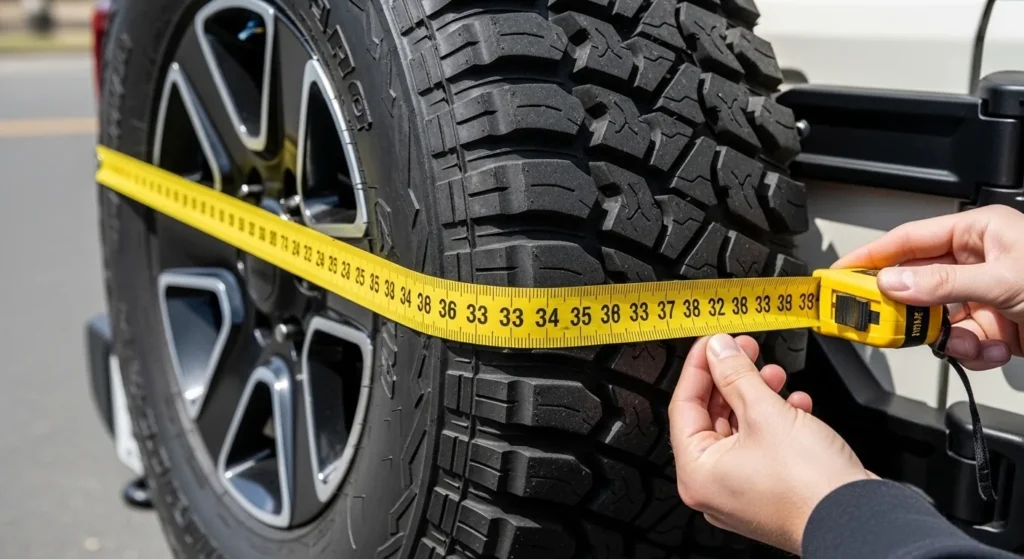
Learning how to measure a spare tire correctly is the single most important step before buying a spare tire cover. The good news? Measuring how to measure a spare tire takes less than 2 minutes and requires no special tools.
Why You Need to Know How to Measure a Spare Tire
Spare tire covers are sized by tire diameter — the full measurement across the tire from one edge to the other, including the tread. This is not the same as your wheel or rim size.
Even a difference of one inch can affect how the cover fits. A cover that’s too small won’t go on properly. A cover that’s too large will sag, wrinkle, and flap while driving. Because most spare tire covers are custom-made to order, choosing the wrong size means you cannot return or exchange the product.
That’s why measuring before you order isn’t optional — it’s the single most important step in the entire buying process.
Method 1: Read the Tire Sidewall (Fastest & Most Accurate)
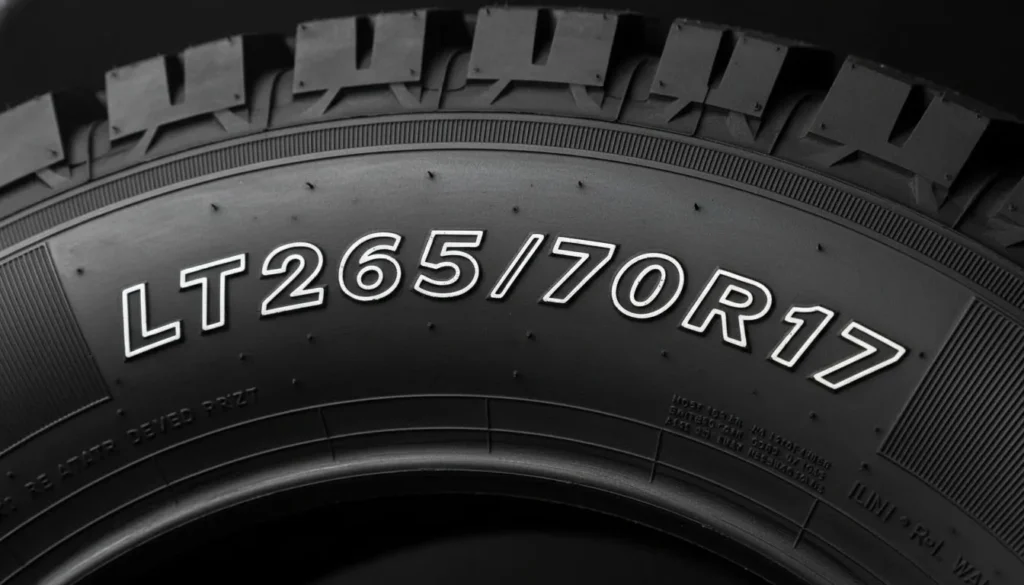
The easiest way to find your tire size is already printed on the tire itself. Look at the sidewall of your spare tire and you’ll see a code that looks something like this:
LT265/70R17
This code tells you the tire width, aspect ratio, and wheel diameter. To convert it into an overall tire diameter in inches, enter this code into any free online tire size calculator. The result will give you a number like 31.6 inches — which tells you to choose a 32-inch spare tire cover.
This method is recommended because it’s based on the manufacturer’s exact specifications and takes about 30 seconds.
How to read the sidewall code:
- LT — tire type (Light Truck). May also be “P” for Passenger.
- 265 — tire width in millimeters
- 70 — aspect ratio (sidewall height as a percentage of width)
- R — radial construction
- 17 — wheel diameter in inches
Important: The “17” at the end refers to the wheel, not the tire. Do not use this number to choose your spare tire cover size. Always calculate the full tire diameter.
This is the fastest way to learn how to measure a spare tire without any tools — just read what’s already printed on the rubber.
Method 2: Measure the Tire Manually
If you prefer a hands-on approach, here is how to measure a spare tire manually using a tape measure.
If the sidewall information is worn off, unreadable, or simply not available, you can measure the tire directly. This method is slightly less precise but works well when done carefully.
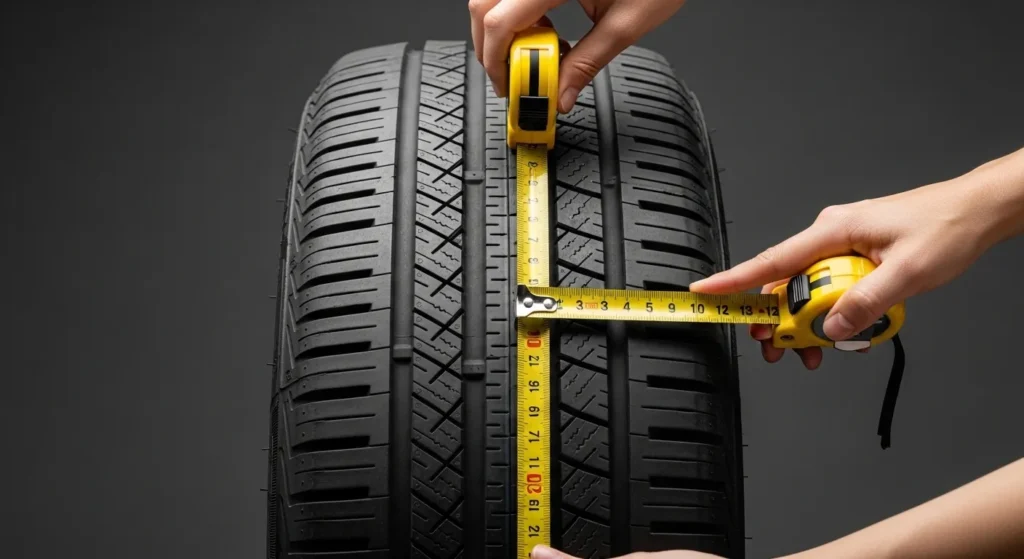
Step-by-step manual measurement:
- Make sure the spare tire is fully inflated to the correct pressure. A flat or underinflated tire will give you a smaller measurement than the actual size.
- Lay the tire flat on the ground, or measure it while it’s mounted.
- Use a flexible measuring tape or a straight ruler.
- Measure straight across the center of the tire — from the outer edge of the tread on one side to the outer edge of the tread on the other side.
- Do not include the rim or wheel in your measurement. Measure only the rubber.
- Record the measurement in inches. Round to the nearest whole number.
For example, if your tire measures 32.4 inches, choose a 33-inch cover. When between sizes, always round up — a slightly larger cover fits better than one that’s too small.
Common Measuring Mistakes to Avoid
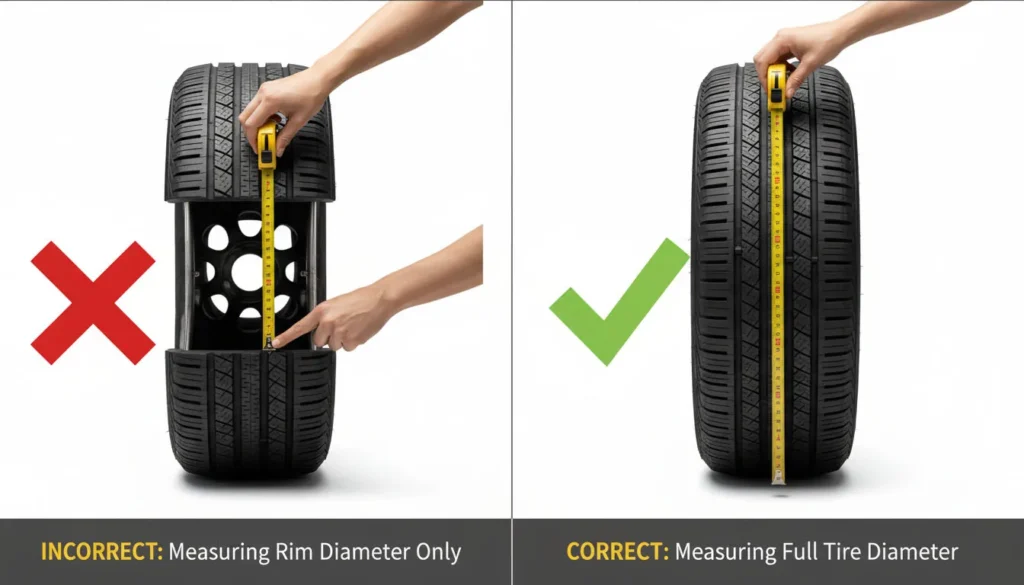
These mistakes account for the majority of wrong-size orders. Knowing them in advance will save you time and frustration.
Mistake #1: Using wheel size instead of tire diameter
This is the single most common error. Many buyers see “R17” on the sidewall and assume they need a 17-inch spare tire cover. A 17-inch wheel can be paired with tires ranging from 28 inches to 34 inches in diameter. The wheel size tells you nothing about which cover you need.
Mistake #2: Measuring a flat tire
A deflated spare tire measures smaller than it actually is when inflated. Always check tire pressure before measuring to ensure an accurate result.
Mistake #3: Ignoring tire width
Two tires can have the same diameter but very different widths. Wide or off-road tires with aggressive tread patterns may feel tight in a standard cover even when the diameter matches. If your tire looks unusually wide or thick, consider sizing up or choosing a V2 option.
Mistake #4: Guessing based on appearance
Tires that look similar to the eye can differ by one or two inches. Always measure — even if you’ve owned spare tires before, upgrades or brand changes may mean your current tire is a different size than you expect.
What to Do With Your Measurement
Once you have your tire diameter in inches, match it to the closest available size. At TireCoverPrint.com, spare tire covers are available in the following sizes:
27″, 28″, 29″, 30″, 31″, 32″, 33″, 34″, 34″ V2, and 35″
Choose the size that matches your measurement. If you’re between sizes, choose the larger option. If your tire is wide, bulky, or has an aggressive off-road tread, consider 34″ V2 — which is designed for tires that measure close to 34 inches but have extra bulk from deep tread or thick sidewalls.
After selecting size, remember to also choose the correct camera hole option at checkout — with camera hole or without — based on whether your vehicle has a rear-mounted backup camera positioned through the spare tire.
Quick Reference: Measurement Summary
| Method | How | Best For |
|---|---|---|
| Sidewall code + calculator | Read code, use online calculator | Most accurate, fastest |
| Manual tape measure | Measure edge to edge (tread only) | When sidewall is unreadable |
Frequently Asked Questions
Does it matter if I’m between sizes?
Yes. When your tire measures between two sizes — for example, 31.5 inches — always choose the larger size (32″). A slightly larger cover installs more easily, looks smoother, and lasts longer than one that’s stretched too tight.
Do I need to measure again if I change tires?
Yes. If you upgrade to larger tires, switch from street to off-road tires, or change tire brands, your spare tire diameter may be different. Recheck before ordering a new cover.
Can I use my vehicle’s manual to find the tire size?
Your owner’s manual lists the recommended tire size for your vehicle, which is a good starting point. However, if your tires have been upgraded or replaced with a different size, the manual may not reflect your current spare tire. Always confirm by reading the sidewall directly.
For tire size conversion, use the free calculator at TireSizeCalculator.net to convert your sidewall code into inches instantly.
Final Thoughts
Now that you know how to measure a spare tire using both methods, you can order your cover with full confidence.
Measuring your spare tire correctly is the one step that determines everything else. It takes two minutes and requires nothing more than a measuring tape — or simply reading the code that’s already printed on your tire.
Once you have your measurement, choosing the right cover becomes straightforward. Get the size right, confirm your camera hole option, and your spare tire cover will fit perfectly from day one.
For a full breakdown of all sizes from 27 to 35 inches, including the 34″ V2 option and guidance for specific vehicle types, read our complete guide below.
👉 How to Choose the Right Spare Tire Cover Size (27–35 Inches) — Complete Guide
Ready to find the right fit? Browse our full collection of custom spare tire covers, available in sizes 27–35 inches for Jeep, SUV, RV, and trailer owners.