
Buying Guides
Do SUV Owners Really Need Spare Tire Covers? The Proven Answer
Jun
The question of whether SUV owners need spare tire covers comes up more often than you might expect — and the honest answer is more nuanced than a simple yes or no. Unlike Jeep Wranglers where the spare tire is always externally mounted and permanently exposed, SUVs vary significantly in how and where their spare tires are stored.
This guide explains exactly when SUV owners need spare tire covers, when a cover is optional, what real benefits it provides, and how to determine whether your specific SUV setup makes a cover a practical necessity or a useful accessory.
Do SUV Owners Need Spare Tire Covers? The Direct Answer
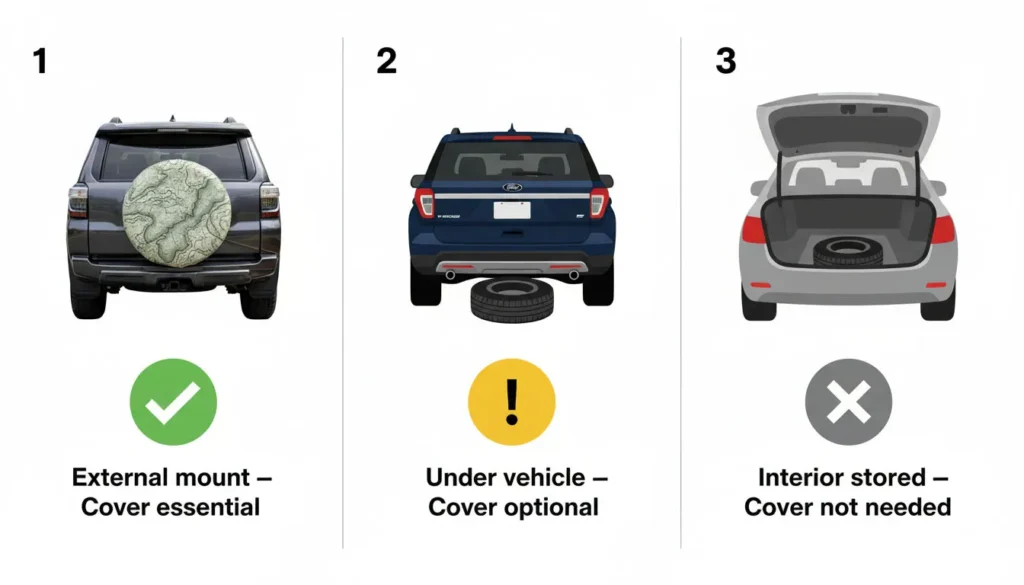
It depends on how your spare tire is stored. Here is the direct breakdown:
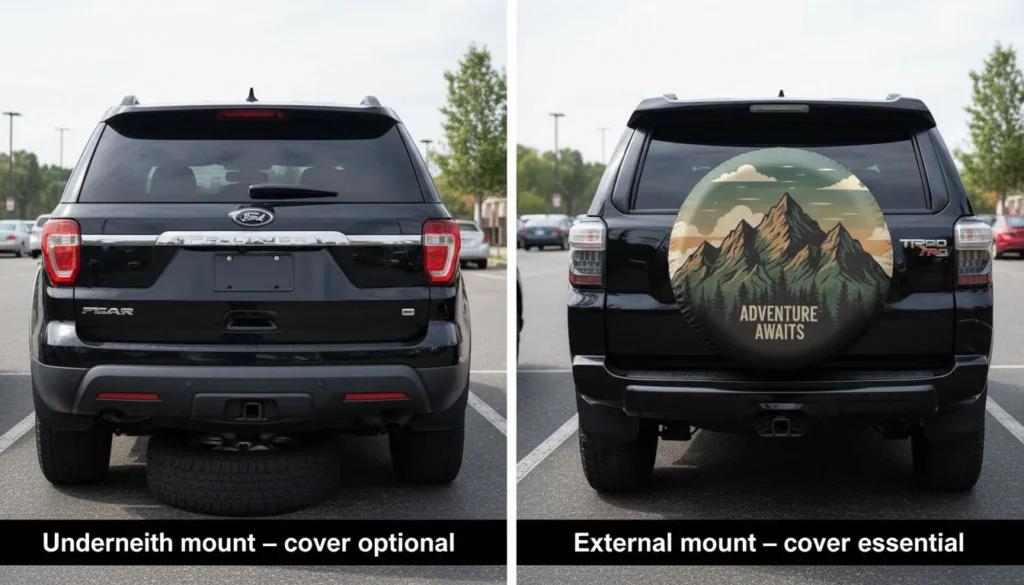
- Externally rear-mounted spare tire: Yes — a spare tire cover is strongly recommended and provides meaningful protection
- Underneath-mounted spare tire: Optional — the spare is largely protected from UV by the vehicle itself, but a cover helps during storage
- Trunk or interior-stored spare: Not necessary for daily use — the spare is fully protected inside the vehicle
The key variable is exposure. When the spare tire is visible and exposed to sunlight, weather, and environmental elements, a cover provides real protective and aesthetic value. When it is hidden underneath or inside the vehicle, the urgency is significantly lower.
Which SUVs Have Externally Mounted Spare Tires?
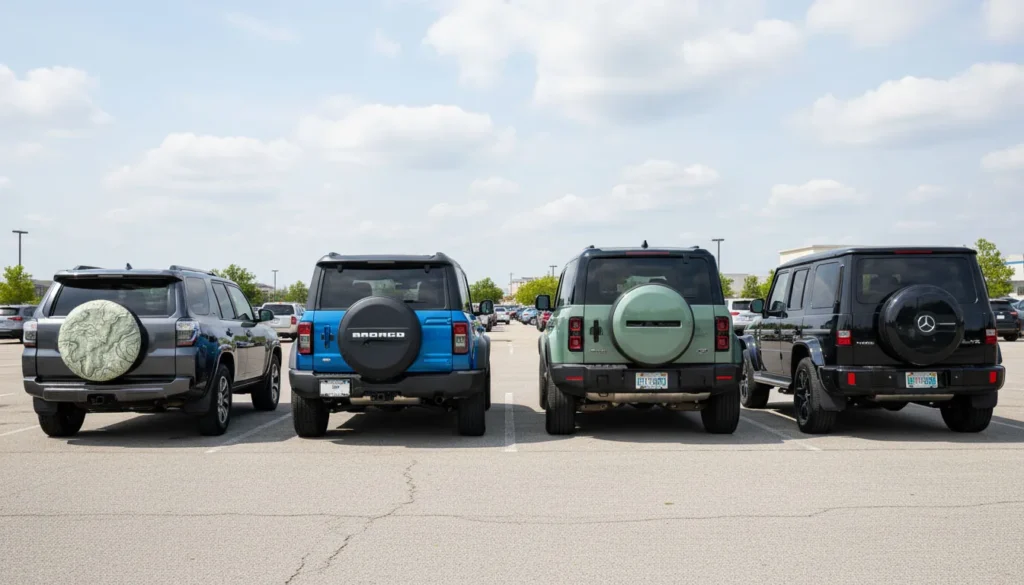
Externally mounted spare tires — where the spare is bolted to the rear of the vehicle and fully visible — are less common on modern SUVs than they were in previous generations. However, several popular and widely-driven SUV models still feature this configuration:
- Toyota 4Runner — rear door-mounted spare, all generations
- Ford Bronco — rear tailgate-mounted spare (2021–present)
- Land Rover Defender — rear-mounted spare
- Mercedes-Benz G-Class — rear-mounted spare
- Jeep Grand Cherokee (older generations) — some had rear-mounted spares
- Some older Ford Explorer and Chevrolet Blazer models — rear-mounted spares on certain trims
If your SUV falls into this category, the answer to whether SUV owners need spare tire covers is an unambiguous yes — the exposure conditions are nearly identical to a Jeep Wrangler, and the same protection benefits apply.
Benefits of Spare Tire Covers for SUVs With External Spares
Benefit 1: UV Protection Extends Tire Life
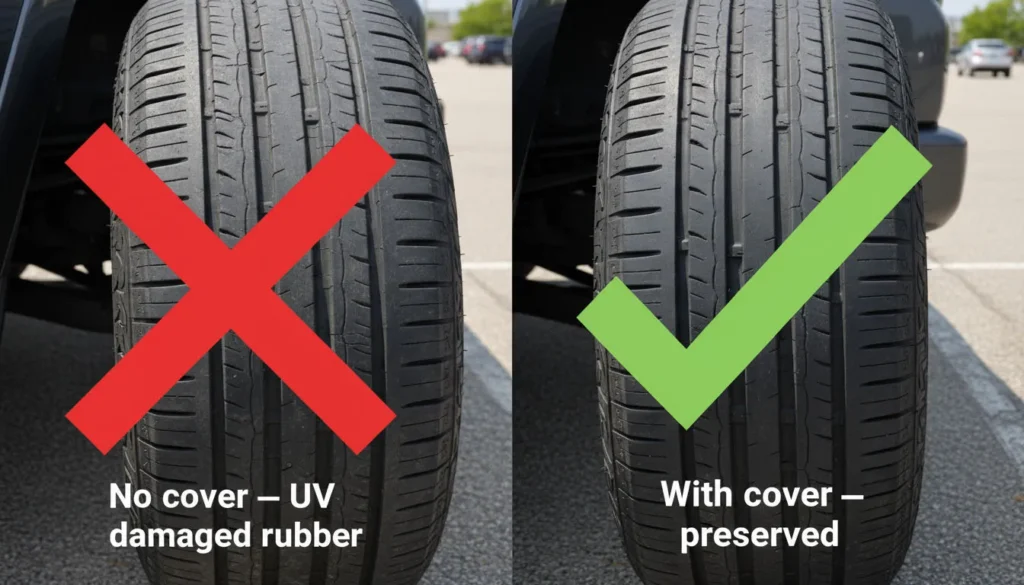
An externally mounted spare tire on an SUV is exposed to UV radiation every time the vehicle is parked outdoors. UV exposure is the primary cause of rubber degradation — it causes the rubber to oxidize, dry out, crack, and lose flexibility over time. This process is gradual and often invisible until the damage is already significant.
A UV-resistant spare tire cover blocks the majority of this radiation from reaching the tire surface. For SUV owners who park outdoors regularly in sunny climates, this protection can extend the spare tire’s safe service life by years compared to an unprotected tire.
Benefit 2: Weather Resistance Prevents Surface Degradation
Rain, snow, road salt, bird droppings, and tree sap all contribute to accelerated surface degradation on unprotected spare tires. An externally mounted SUV spare tire faces all of these threats continuously during normal driving and parking.
A properly fitted spare tire cover acts as a barrier against these environmental threats — keeping the tire surface clean, dry, and protected between uses.
Benefit 3: Improved Rear Appearance
An exposed, bare spare tire on the rear of a Toyota 4Runner or Ford Bronco — particularly one that has accumulated road grime or UV fading — detracts from the vehicle’s overall appearance. A spare tire cover creates a clean, finished look that complements the vehicle’s design and signals that the owner pays attention to detail.
For SUV owners who take pride in their vehicle’s appearance and maintain it carefully, a spare tire cover is part of the complete package — not an afterthought.
Benefit 4: Personalization Opportunity
The rear of an SUV with an externally mounted spare tire presents the same personalization opportunity that Jeep owners have long enjoyed. A custom spare tire cover allows SUV owners to display a design that reflects their personality, interests, or lifestyle — turning a functional necessity into a style statement.
This benefit is particularly relevant for Toyota 4Runner and Ford Bronco owners, both of which have strong enthusiast communities with cultures of personalization similar to the Jeep community.
Benefit 5: Resale Value Preservation
A spare tire in excellent condition — protected from UV and weather damage throughout ownership — contributes positively to the vehicle’s resale presentation. Buyers inspecting a used SUV notice the condition of all visible components, including the spare tire. A well-maintained spare covered throughout ownership looks significantly better than one left exposed for years.
What About SUVs With Underneath-Mounted Spare Tires?
Many modern mid-size and full-size SUVs — including the Ford Explorer, Chevrolet Traverse, Honda Pilot, and Toyota Highlander — store the spare tire underneath the vehicle rather than on the rear. In this configuration:
- The spare tire is shielded from direct UV exposure by the vehicle’s body above it
- Some weather exposure occurs, but it is significantly less than an externally mounted spare
- Road debris and moisture can reach the tire during driving
For underneath-mounted spares, a spare tire cover is not necessary for daily driving — but it is useful if:
- You remove the spare for long-term storage outside the vehicle
- The vehicle is stored outdoors for extended periods where the underneath exposure is more significant
- You want to keep the spare clean and clearly identifiable when working on the vehicle
The Toyota 4Runner: The SUV Most Like a Jeep for Spare Tire Cover Use
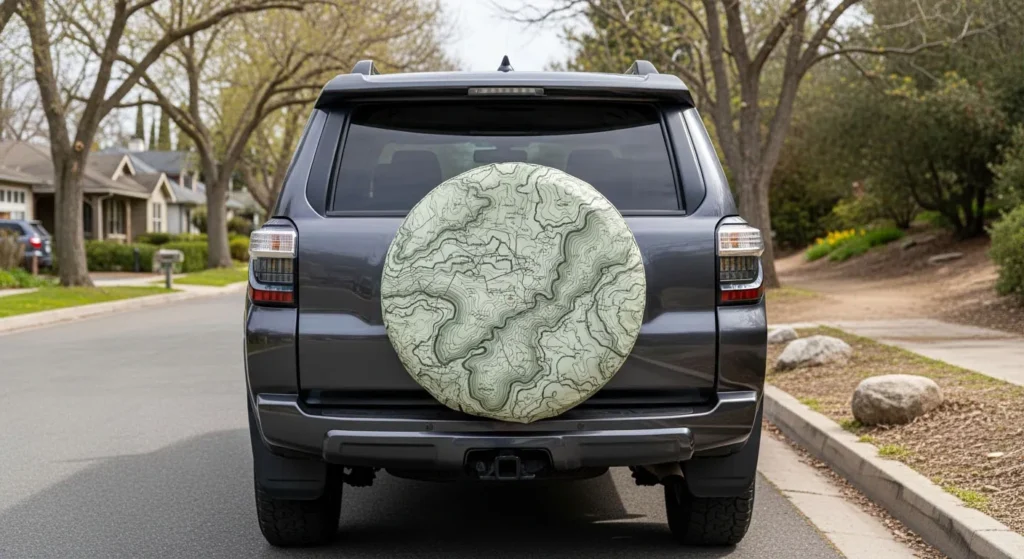
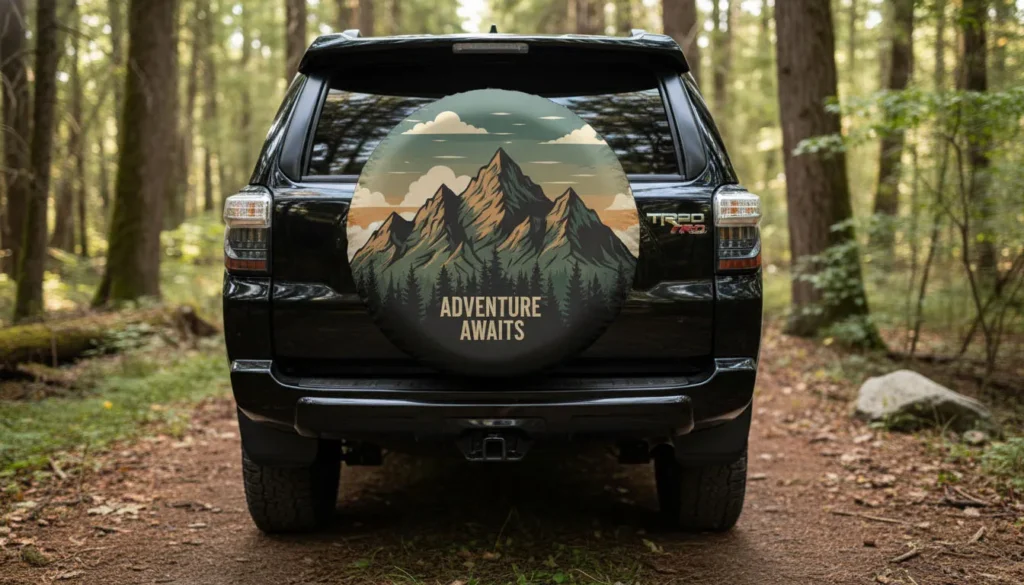
Among SUVs where spare tire covers are most relevant, the Toyota 4Runner stands out as the closest equivalent to a Jeep Wrangler. The 4Runner’s rear door-mounted spare tire is fully exposed in exactly the same way as a Wrangler’s — facing rearward, fully visible, and completely exposed to UV, weather, and road conditions.
4Runner owners have increasingly adopted the spare tire cover culture from the Jeep community, and custom 4Runner spare tire covers have become a popular accessory in the Toyota off-road community. Sizing for the 4Runner depends on the specific trim and any tire upgrades:
| 4Runner Trim / Setup | Common Tire Size | Cover Size |
|---|---|---|
| SR5 / Limited (stock) | 265/65R17 | 31″ |
| TRD Off-Road (stock) | 265/70R17 | 32″ |
| TRD Pro (stock) | 265/70R17 | 32″ |
| Upgraded AT tires | 275/70R17 | 32″ or 33″ |
| Lifted with larger tires | 285/70R17 | 33″ or 34″ V2 |
Common Objections — Addressed Directly
“My SUV doesn’t go off-road, so I don’t need a cover”
UV damage happens in parking lots, not on trails. A SUV parked outdoors in a sunny driveway or office parking lot accumulates UV exposure on the spare tire every day. Off-road use is irrelevant to the UV and weather protection argument for spare tire covers.
“My SUV’s spare is stored underneath, so it doesn’t need protection”
For underneath-mounted spares, this is largely correct for daily driving. However, if the vehicle is parked outdoors for extended periods, the underneath exposure is more significant than many owners realize — particularly in areas with high ambient UV levels.
“Spare tire covers are just for Jeep people”
The culture may have originated in the Jeep community, but the protective benefits apply to any vehicle with an exposed spare tire. Toyota 4Runner, Ford Bronco, Land Rover Defender, and Mercedes-Benz G-Class owners all benefit from the same UV and weather protection that Jeep owners have recognized for decades.
Frequently Asked Questions
Does my Toyota 4Runner need a spare tire cover?
Yes — the Toyota 4Runner has a rear door-mounted spare tire that is fully exposed to UV and weather in exactly the same way as a Jeep Wrangler spare tire. A spare tire cover is strongly recommended for any 4Runner owner who parks outdoors regularly.
My Ford Explorer stores the spare underneath. Do I still need a cover?
For daily driving, a cover on an underneath-mounted spare is optional rather than necessary. The vehicle body above the spare provides significant shielding from direct UV exposure. A cover is more useful for extended outdoor storage or if you remove the spare for any reason.
What size spare tire cover does a Ford Bronco need?
The Ford Bronco (2021–present) typically uses 255/70R18 or 285/70R17 tires depending on the trim level, producing overall diameters of approximately 32–33 inches. Measure your specific spare tire to confirm the correct size before ordering.
Can I put a custom design on an SUV spare tire cover?
Yes — custom spare tire covers are available in all sizes from 27″–35″, including the sizes used by most SUVs with externally mounted spares. Any photo, design, or artwork can be printed on a cover sized for your specific tire.
Final Thoughts
Whether SUV owners need spare tire covers ultimately depends on one thing: is the spare tire externally mounted and exposed? If yes, a cover provides real, measurable protection benefits that extend the tire’s life, improve appearance, and preserve resale value. If the spare is stored underneath or inside the vehicle, a cover is a useful but non-essential accessory.
For Toyota 4Runner, Ford Bronco, Land Rover Defender, and similar SUVs with visible rear-mounted spare tires, the answer is clear: a spare tire cover is as essential as it is for any Jeep Wrangler owner.
For a complete guide to spare tire covers for Jeep, SUV, and RV owners — including sizing guidance, material comparisons, and buying tips — read our full guide below.
👉 Complete Guide to Spare Tire Covers for Jeep, SUV & RV
For SUV tire safety and maintenance standards, refer to the NHTSA tire safety guidelines — the official U.S. government resource for tire maintenance and vehicle safety.
Ready to find the right cover for your SUV? Browse our full collection of custom spare tire covers, available in sizes 27″–35″ for all SUV types with externally mounted spare tires.