
Buying Guides, RV & Trailer Guides, Vehicle Guides
Spare Tire Cover Camera Hole RV Trailer: The Proven Guide
Jun
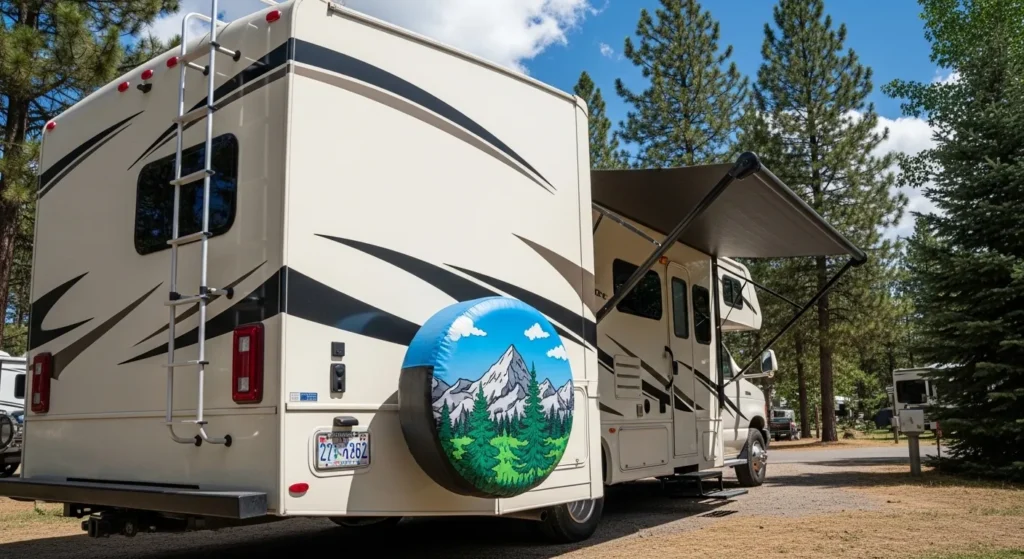
Spare tire cover camera hole RV trailer is a question that comes up less frequently than the same question for Jeep Wrangler owners — and for good reason. The camera configurations on RVs and trailers are fundamentally different from those on passenger vehicles with spare-tire-mounted cameras, and the answer for most RV and trailer owners is simpler than they might expect.
This guide explains the complete picture of the spare tire cover camera hole RV trailer question — how backup cameras work on RVs and trailers, why the spare tire cover camera hole question is different for these vehicle types, and how to confirm the correct option for your specific setup.
Spare Tire Cover Camera Hole RV Trailer: The Direct Answer
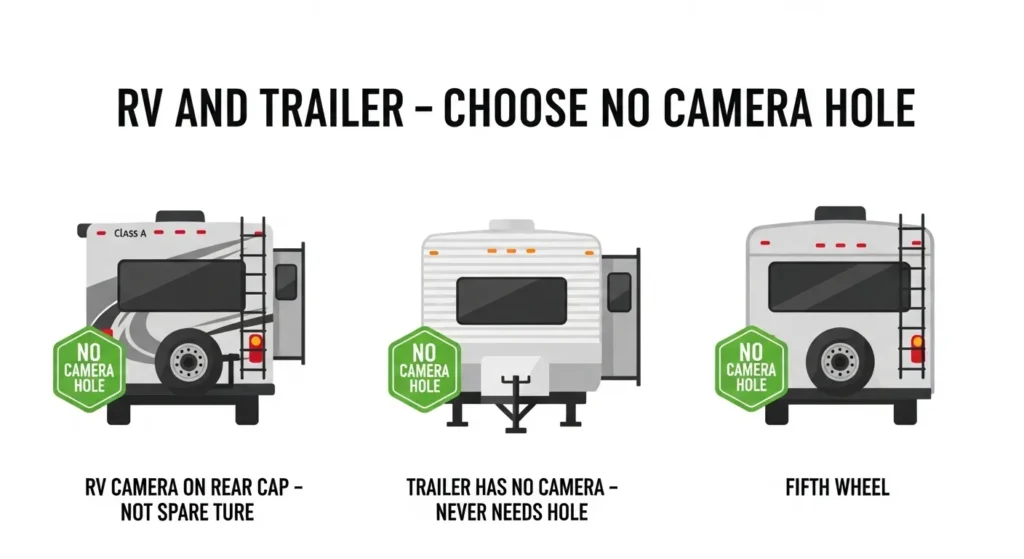
For the vast majority of RV and trailer owners, the answer to the spare tire cover camera hole RV trailer question is: No Camera Hole needed.
The reasons are straightforward:
- RV backup cameras are not mounted through spare tire carriers. RV backup cameras — whether factory-installed or aftermarket — are almost always mounted on the rear cap of the motorhome, the rear bumper, or in the license plate area. None of these positions are behind the spare tire.
- Trailers do not have backup cameras at all in the standard sense — trailers are towed and do not require their own backup cameras. Any camera used when backing a trailer is typically mounted on the tow vehicle, not on the trailer itself.
- RV spare tires are typically stored in compartments on many motorhome configurations — not externally mounted where a cover would be needed. When RV spare tires are externally mounted, they are in positions that are separate from any camera system.
How RV Backup Cameras Work and Why They Do Not Affect the Cover
Understanding RV camera systems helps clarify why the spare tire cover camera hole RV trailer question almost always resolves to No Camera Hole:
Class A Motorhomes
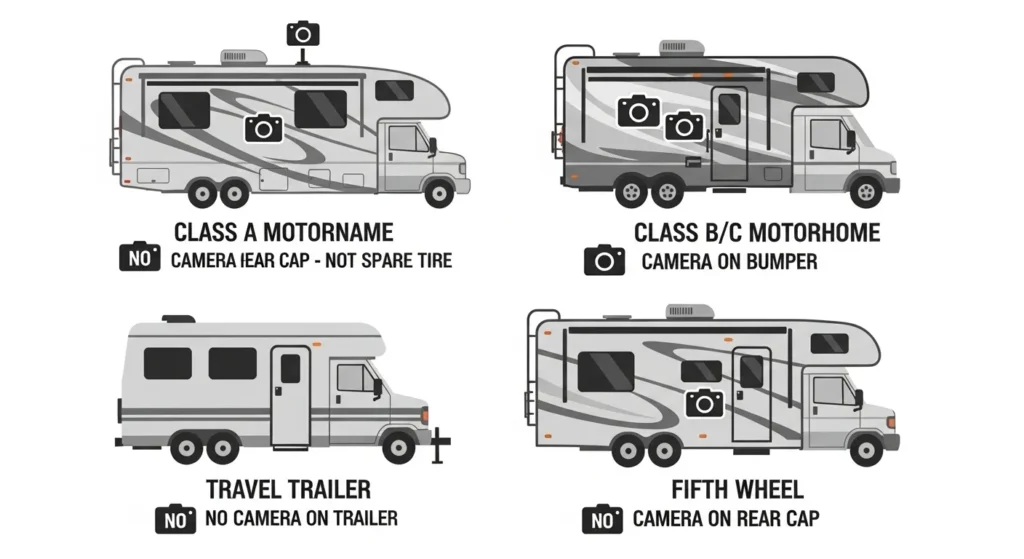
Class A motorhomes — the large, bus-style RVs — almost universally have backup cameras mounted on the rear cap of the vehicle, typically centered near the top of the rear wall. This elevated position provides the wide-angle rear view needed for maneuvering these large vehicles. The spare tire on a Class A, if externally mounted, is typically on the rear bumper below this camera position and would not block a camera mounted higher on the rear cap.
Class B and Class C Motorhomes
Class B (camper vans) and Class C motorhomes (cab-over units) typically have backup cameras mounted on the rear bumper or rear cap. Spare tire positions on these vehicles vary — some have spare tires stored internally, some on rear bumper carriers. In either case, the camera position is separate from the spare tire mounting location.
Travel Trailers and Fifth Wheels
Travel trailers and fifth wheels do not have their own backup cameras — they are passive towed units. The backup camera used when reversing a trailer rig is mounted on the tow vehicle (truck or SUV), not on the trailer. The trailer spare tire cover has no interaction with any camera system.
Truck Campers
Truck campers sit in the bed of a pickup truck. Any backup camera is mounted on the rear of the camper unit or truck — not through a spare tire carrier. No camera hole is needed in a spare tire cover for these configurations.
When an RV Spare Tire Cover Might Need a Camera Hole
While No Camera Hole is correct for the vast majority of spare tire cover camera hole RV trailer situations, there are specific aftermarket configurations where a camera hole could theoretically be needed:
Aftermarket Camera Mounted Through Spare Tire Carrier
Some RV owners — particularly those who have added aftermarket backup camera systems — may have had the camera installed through a spare tire carrier assembly on the rear of the vehicle. This is an unusual installation choice but is not impossible. If you have had an aftermarket camera system installed and are uncertain where the camera lens is located:
- Perform the visual check: look for a camera lens at the center of the spare tire
- If a lens is visible through the spare tire → With Camera Hole
- If no lens is visible → No Camera Hole
RV With Rear-Door-Mounted Spare Tire and Integrated Camera
A small number of specialty RV configurations — particularly some van conversion builds and custom coaches — mount both the spare tire and a backup camera on a rear swing door. In these configurations, if the camera is integrated into the spare tire carrier on the rear door, a camera hole may be needed. Visual confirmation is the definitive check for these unusual configurations.
What to Look for When Checking an RV or Trailer Spare Tire
Performing the spare tire cover camera hole RV trailer visual check is the same process as for any other vehicle:
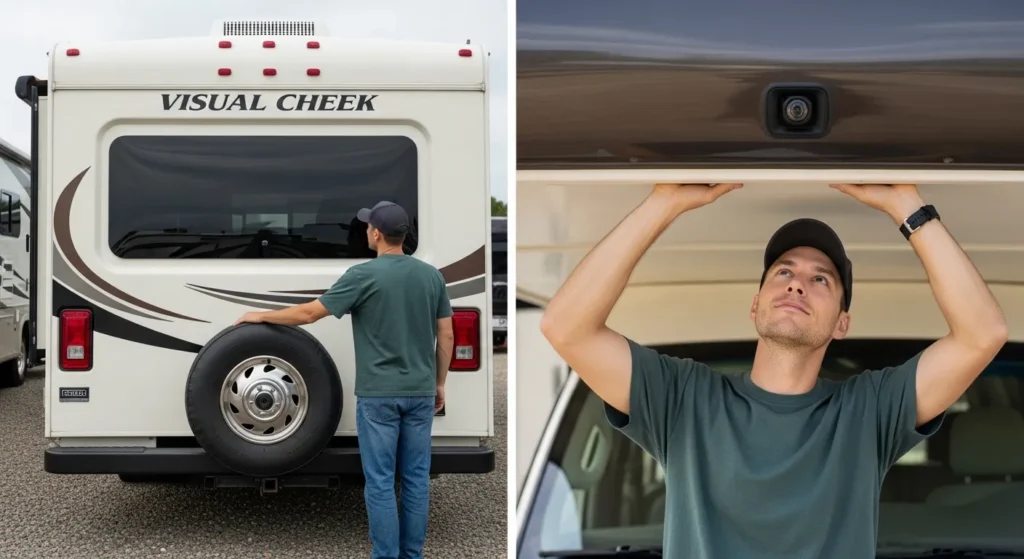
- Stand directly behind the RV or trailer. Position yourself facing the externally mounted spare tire.
- Look at the center of the spare tire. Examine the hub area for any camera lens or housing. On a standard RV or trailer configuration, no camera lens will be visible here.
- Look at the rear of the vehicle for the actual camera location. The backup camera on a motorhome will typically be visible on the rear cap or bumper — clearly separate from the spare tire position.
- If no camera is visible through the spare tire → No Camera Hole. This will be the result for virtually all standard RV and trailer configurations.
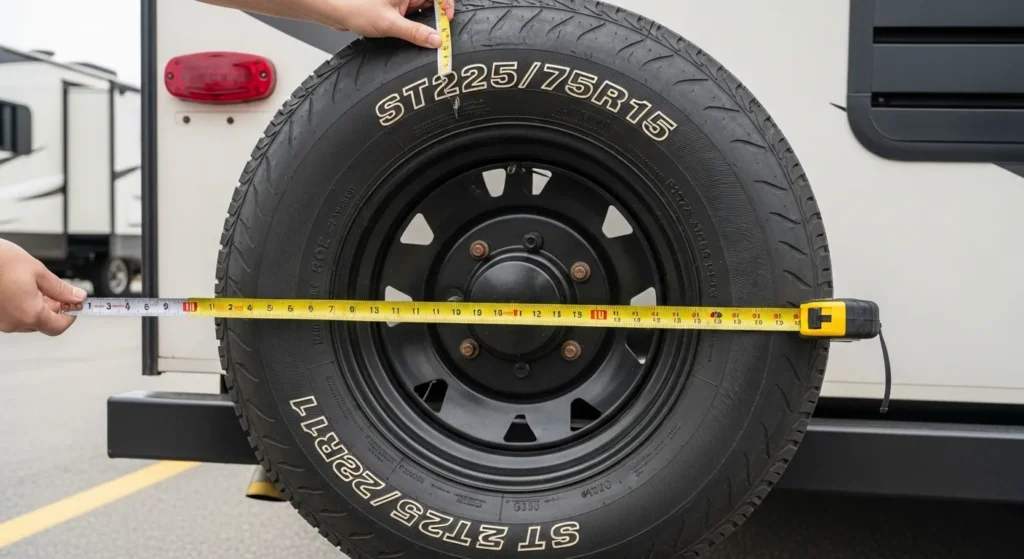
Common RV and Trailer Spare Tire Sizes
Beyond the camera hole question, selecting the correct cover size for an RV or trailer spare tire is the primary ordering decision. Common RV and trailer spare tire sizes:
| Tire Code | Overall Diameter | Cover Size | Typical Application |
|---|---|---|---|
| ST205/75R15 | ~27.1″ | 27″ | Small travel trailer |
| ST225/75R15 | ~28.3″ | 28″ | Mid-size travel trailer |
| LT235/85R16 | ~31.7″ | 32″ | Class C motorhome |
| LT245/75R17 | ~31.5″ | 32″ | Class B/C motorhome |
| LT265/70R17 | ~31.6″ | 32″ | Class C motorhome |
| LT275/70R18 | ~33.2″ | 33″ | Class A motorhome |
| LT285/75R16 | ~32.8″ | 33″ | Class A motorhome |
Always measure the actual diameter of your specific RV or trailer spare tire — RV tire sizes vary significantly across makes, models, and model years, and the actual size may differ from what is listed in the owner’s manual if the tires have been replaced with a different size.
Why UV Protection Is Especially Important for RV and Trailer Spare Tires
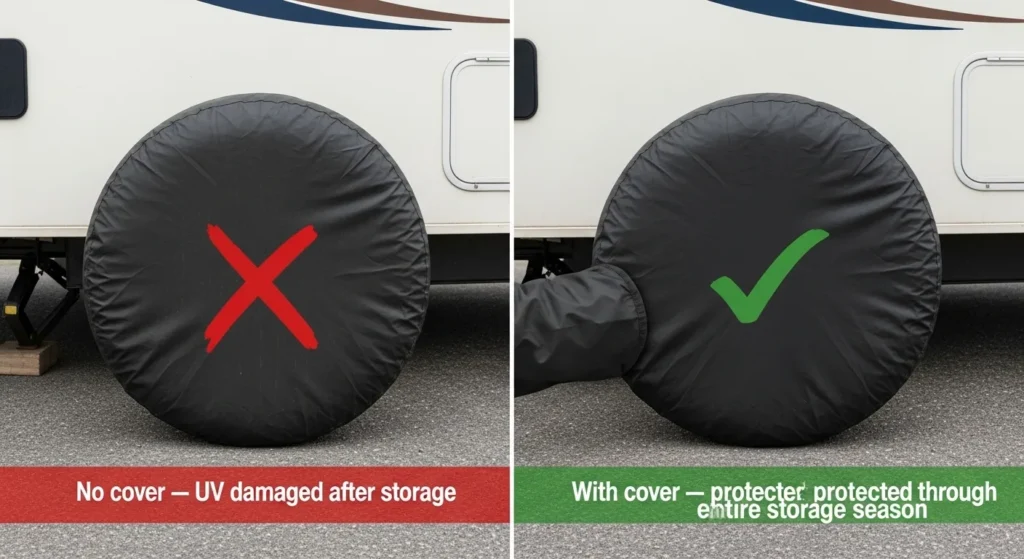
While the camera hole question is straightforward for most RV and trailer owners, the UV protection function of the spare tire cover is especially critical for these vehicle types:
- RVs and trailers are frequently stored outdoors for extended periods — sometimes for entire seasons — during which the spare tire accumulates significant UV exposure without the periodic movement and inspection of a daily driver
- ST (Special Trailer) tires used on trailers are particularly vulnerable to UV and ozone degradation compared to LT or passenger tires
- RV and trailer tire replacement costs are high — typically $150–$400+ per tire — making cover protection a high-value investment
- A spare tire that degrades during storage is unavailable when a roadside flat occurs — precisely the situation where reliable spare tire protection matters most
For these reasons, a quality UV-resistant spare tire cover without a camera hole is the ideal solution for the vast majority of RV and trailer owners — providing maximum UV and weather protection across the full tire face with no unnecessary opening.
Frequently Asked Questions
Does my RV spare tire cover need a camera hole?
For most standard RV configurations, No Camera Hole is correct. RV backup cameras are typically mounted on the rear cap or bumper — not through the spare tire carrier. Perform the visual check: look for a camera lens at the center of the spare tire. If no lens is visible, choose No Camera Hole for complete, seamless UV and weather protection across the full tire face.
Does a travel trailer spare tire cover need a camera hole?
No — travel trailers do not have their own backup cameras. The backup camera used when reversing a trailer is mounted on the tow vehicle, not on the trailer. Travel trailer spare tire covers never need a camera hole for camera compatibility reasons. Choose No Camera Hole for complete tire face coverage and maximum UV protection during storage.
I have a fifth wheel with an aftermarket backup camera. Does the cover need a camera hole?
Aftermarket cameras on fifth wheels are typically mounted on the rear cap or a bracket — not through the spare tire carrier. Perform the visual check: if no camera lens is visible through the center of the spare tire, No Camera Hole is correct. If an aftermarket installer has positioned the camera through the spare tire carrier in an unusual configuration, With Camera Hole would be needed — confirm visually before ordering.
What is the best spare tire cover for an RV stored outdoors?
For an RV stored outdoors — particularly for seasonal storage periods — a UV-resistant, dye-sublimation-printed cover without a camera hole provides the ideal protection. The UV-treated polyester blocks the sustained UV exposure that accumulates during storage, the DWR water-resistant coating handles rain and moisture, and the No Camera Hole option provides complete, uninterrupted coverage across the full tire face for maximum protection during extended storage periods.
Final Thoughts
The spare tire cover camera hole RV trailer question has a simple answer for almost all RV and trailer owners: No Camera Hole is correct. RV cameras are not mounted through spare tire carriers, and trailers do not have their own backup cameras at all. The visual check confirms this in 60 seconds — and for most RV and trailer owners, that confirmation is all that is needed before ordering.
With the camera hole question resolved, the primary focus for RV and trailer owners is selecting the correct cover size for maximum UV and weather protection during storage — where the spare tire cover provides its most valuable protective function.
For the complete guide to camera hole options — including how to check any vehicle, which vehicles need a camera hole, and the full comparison of options — read our full guide below.
👉 With or Without Camera Hole? Which Spare Tire Cover Do You Need?
For backup camera safety standards, refer to the NHTSA backup camera safety guidelines — the official U.S. government resource for backup camera safety standards.
Ready to order the right cover for your RV or trailer? Browse our full collection of custom spare tire covers for RVs and trailers, available without camera hole in sizes 27″–35″.