
Buying Guides, Vehicle Guides, ❓ FAQ & Help
Spare Tire Covers for Trailers: The Proven Complete Buying Guide
Jun
Spare tire covers for trailers serve a more critical protective function than covers on most other vehicle types — yet they are among the most commonly overlooked trailer accessories. Trailer spare tires sit fully exposed to sunlight, rain, road debris, and temperature extremes for extended periods, often without the regular inspection and attention that a daily-driven vehicle’s spare receives.
This guide explains everything you need to know about spare tire covers for trailers — from sizing the cover correctly for your specific trailer tire, to material considerations for long-term outdoor exposure, to the specific ways a properly fitted cover protects your investment and ensures the spare is ready when you need it most.
Why Spare Tire Covers for Trailers Are Especially Important
Trailer spare tires face a unique combination of threats that makes protection more critical than for most other vehicle types:
Extended Stationary Exposure
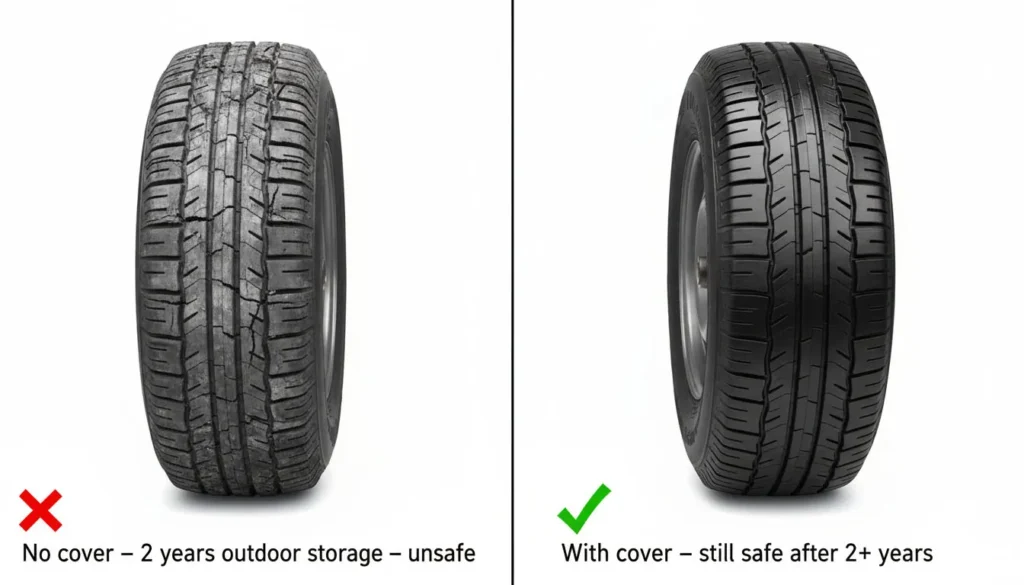
Unlike daily-driven vehicles where the spare tire is at least occasionally moved and inspected, trailer spare tires often remain completely stationary for months or years at a time. A travel trailer used seasonally may have its spare tire sitting motionless and exposed for six months or more between uses. During this period, UV radiation, ozone, and moisture accumulate damage without any of the beneficial circulation and flexing that comes with regular use.
ST Tire Vulnerability
Most trailer spare tires carry the ST (Special Trailer) designation. ST tires are engineered for the specific load-bearing demands of trailer use — but they are generally more vulnerable to UV and ozone degradation than LT (Light Truck) or passenger tires of comparable size. Many trailer tire manufacturers and industry safety organizations recommend replacing ST tires every 3–5 years regardless of tread depth, precisely because of how quickly they age under UV and ozone exposure. A quality cover significantly extends the period before replacement becomes necessary.
High Replacement Cost Relative to Trailer Value
Trailer tires — particularly ST tires in larger sizes — are expensive relative to the overall value of many utility and travel trailers. A spare tire cover that costs $35–$50 and extends the spare’s service life by two to three years represents exceptional value when the replacement cost of a single trailer tire ranges from $100 to $350 or more.
Remote Use Scenarios
Travel trailers, fifth wheels, and boat trailers are frequently used in remote locations — campgrounds, boat launches, rural storage facilities — where a flat tire and an unusable degraded spare creates a genuinely difficult situation. A spare that has been protected and maintained is a significantly more reliable emergency resource than one that has been left exposed for years.
Types of Trailers and Their Spare Tire Cover Needs
Travel Trailers
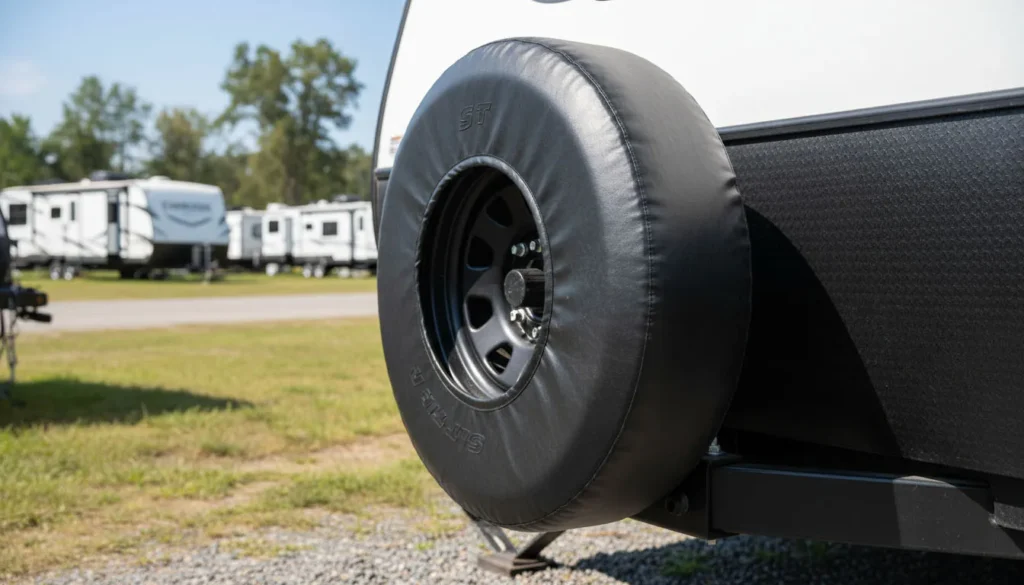
Travel trailers are the most common trailer type requiring spare tire covers. The spare tire is typically mounted on the rear or side of the trailer frame, fully exposed to all weather conditions. Travel trailer spare tires almost always use ST designations and range in size from 27″ to 31″ in overall diameter depending on the trailer’s size and weight rating.
Fifth Wheel Trailers
Fifth wheel trailers are larger and heavier than conventional travel trailers, using correspondingly larger and more expensive spare tires. Spare tire sizes for fifth wheels typically range from 30″ to 32″, with heavier-duty models using larger ST tires with higher load ratings. The higher replacement cost of fifth wheel spare tires makes cover protection especially valuable.
Utility and Cargo Trailers
Enclosed cargo trailers, flatbed trailers, and utility trailers use smaller spare tires than RV trailers — often in the 27″–29″ range. While these tires are less expensive than larger RV trailer tires, they are equally vulnerable to UV and ozone degradation, and a degraded spare on a loaded cargo trailer is just as problematic as one on any other vehicle type.
Boat Trailers
Boat trailers present a unique challenge: they are frequently submerged in water during launch and retrieval, and the spare tire may be exposed to both prolonged UV during summer months and moisture from repeated water exposure. Water-resistant cover material is particularly important for boat trailer spare tire covers.
Horse and Livestock Trailers
Horse trailers and livestock trailers often sit in rural outdoor environments for extended periods between uses, with the spare tire fully exposed. Many horse trailer owners in high-UV states like Texas, Arizona, and California find that unprotected spare tires show significant degradation within two to three years of outdoor storage.
Sizing Spare Tire Covers for Trailers
Getting the correct size is the most important step when choosing spare tire covers for trailers. The ST designation on trailer tires does not change the sizing method — you still need the overall tire diameter in inches to choose the right cover.
Common Trailer Tire Sizes and Corresponding Cover Sizes
| Tire Code | Overall Diameter | Cover Size | Typical Trailer |
|---|---|---|---|
| ST175/80R13 | ~24.5″ | Outside standard range* | Small utility trailer |
| ST205/75R14 | ~26.1″ | Outside standard range* | Light cargo trailer |
| ST205/75R15 | ~27.1″ | 27″ | Small travel trailer |
| ST225/75R15 | ~28.3″ | 28″ | Mid-size travel trailer |
| ST235/80R16 | ~30.0″ | 30″ | Large travel trailer |
| ST235/85R16 | ~30.9″ | 31″ | Fifth wheel trailer |
| ST245/75R17 | ~30.5″ | 31″ | Heavy-duty fifth wheel |
| ST255/80R16 | ~31.1″ | 31″ | Large fifth wheel |
*Tires smaller than 27 inches fall outside the standard 27″–35″ cover range. Always measure your specific spare tire’s actual diameter to confirm the correct cover size before ordering.
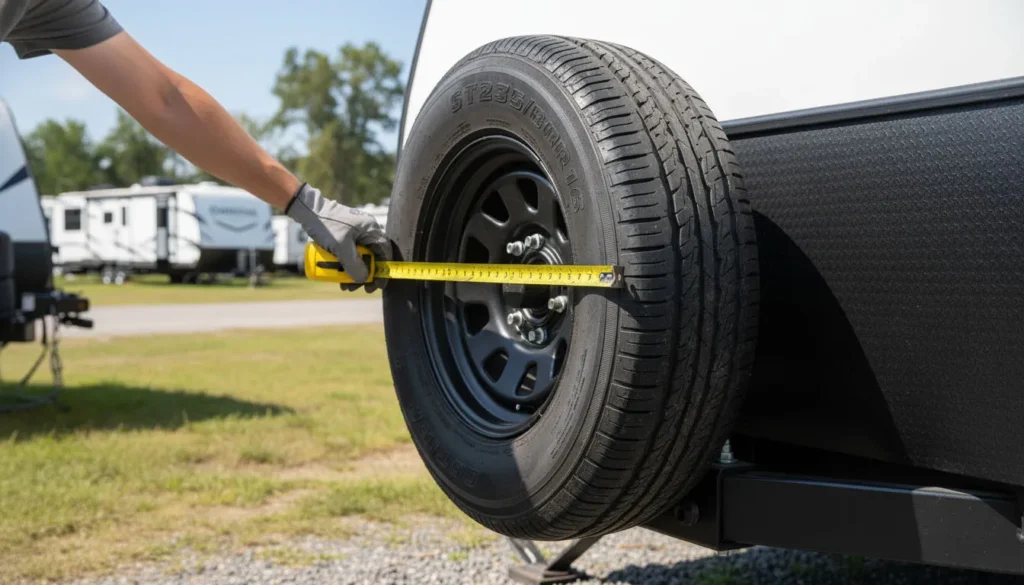
How to Measure Your Trailer Spare Tire
- Inflate the tire to the correct pressure listed on the sidewall
- Use a flexible tape measure
- Measure straight across the center of the tire from tread edge to tread edge
- Record in inches and match to the closest available cover size
- When between sizes, choose the larger option
Material Considerations for Trailer Spare Tire Covers
For trailer use — particularly for trailers stored outdoors for extended periods — material quality matters more than for daily-driven vehicles. These are the key material qualities to prioritize:
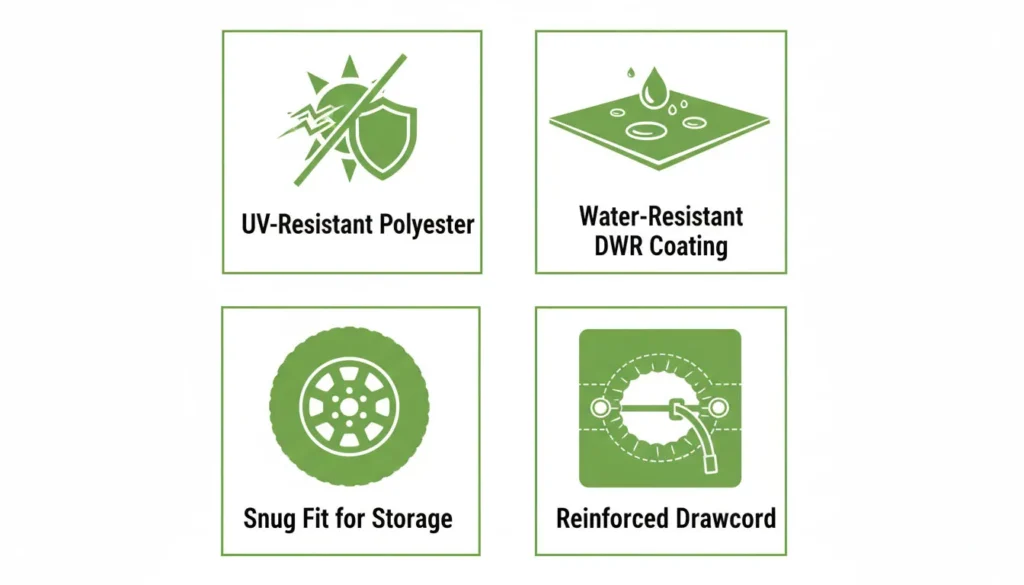
UV-Resistant Polyester
The cover fabric must be UV-treated to provide effective protection for the tire underneath and to resist its own degradation under sustained outdoor exposure. A cover that fades and degrades within a season is not providing the protection it should.
Water-Resistant DWR Coating
For trailers stored outdoors through wet seasons, water resistance matters. A DWR-coated cover sheds rain and morning dew rather than soaking through — keeping the tire surface dry and preventing moisture accumulation between the cover and the tire.
Snug Fit for Long-Term Storage
For trailer applications, snug fit is more important than for daily drivers. A correctly sized cover that fits closely against the tire prevents wind from getting underneath during storage, which would cause flapping that accelerates cover wear and potentially loosens the drawcord over time.
Reinforced Drawcord
A drawcord that stays secure for months of outdoor storage without loosening is essential for trailer use. The drawcord should be made from durable, weather-resistant material that does not stretch or degrade under prolonged outdoor exposure.
Installation Tips for Trailer Spare Tire Covers
Installing a spare tire cover on a trailer spare follows the same process as any other vehicle — but a few trailer-specific tips help ensure the best result:
- Access the spare tire fully before installing. Many trailer spare tires are mounted in positions that make installation slightly more difficult than on a Jeep tailgate. Ensure you have enough clearance to pull the cover over the tire evenly without straining the fabric.
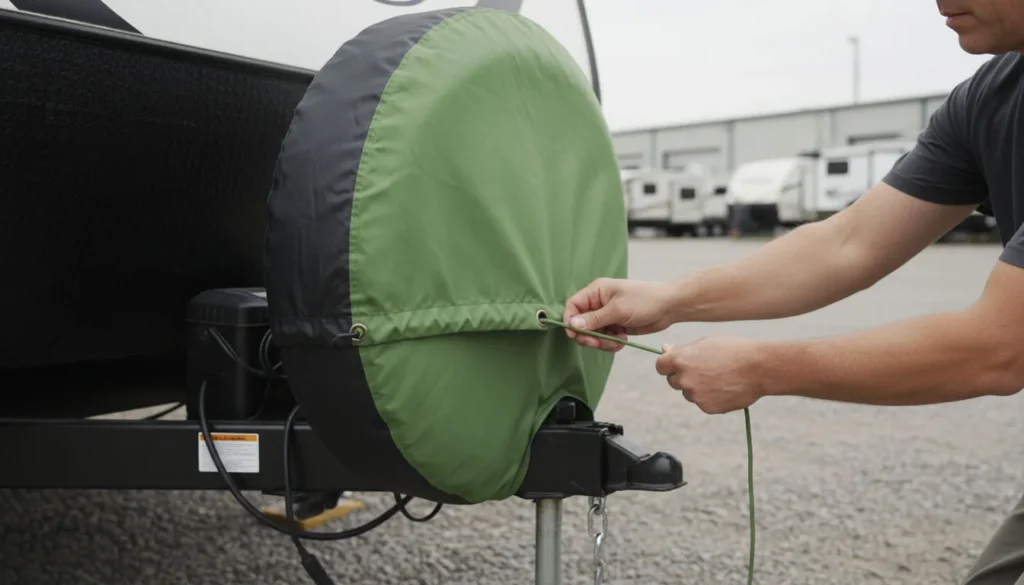
- Tighten the drawcord more firmly for long-term storage. A trailer spare that will be covered for months needs a more firmly tightened drawcord than one that will be checked weekly. Pull the drawcord tight enough that there is no slack in the cover fabric before securing the ends.
- Check the drawcord tightness periodically during extended storage. Even a well-tightened drawcord can loosen slightly over months as the cover fabric adjusts to the tire. Check and retighten every few months during extended storage periods.
- Clean the tire before covering for long-term storage. A clean tire surface under the cover helps prevent contaminants from causing localized degradation during extended storage. A quick wipe-down before storage takes two minutes and improves long-term protection.
Frequently Asked Questions
Do all travel trailers need spare tire covers?
Any travel trailer with an externally mounted spare tire that is exposed to sunlight and weather benefits significantly from a cover. Most travel trailers have externally mounted spares on the rear or side of the trailer frame. If your trailer’s spare is stored in an enclosed compartment, a cover is optional but still useful for protection during any periods of open storage.
What is the most common spare tire cover size for travel trailers?
The most common spare tire covers for trailers size range is 27″–31″, with 28″ and 30″ being particularly common for mid-size travel trailers using ST225/75R15 and ST235/80R16 tires respectively. Always measure your specific tire to confirm before ordering.
Can I use a regular vehicle spare tire cover on my trailer?
Yes — spare tire covers are sized by tire diameter regardless of whether the tire is an ST (trailer), LT (light truck), or P (passenger) designation. As long as you choose the correct size for your trailer tire’s actual diameter, a standard spare tire cover works perfectly for trailer applications.
How often should I replace my trailer spare tire cover?
A quality UV-resistant spare tire cover on a trailer stored outdoors typically lasts 3–5 years before showing significant wear. Inspect the cover annually — if the fabric shows significant fading, thinning, or damage, replace it promptly to maintain continuous protection for the spare tire underneath.
My trailer is stored indoors in a garage. Do I still need a cover?
Indoor storage significantly reduces UV exposure, making the cover less critical. However, ambient ozone and dust exposure continue to affect tires in indoor storage, and a cover provides protection against contamination. For trailers stored indoors year-round, a cover is useful but not as urgent as for trailers stored outdoors.
Final Thoughts
Spare tire covers for trailers are among the highest-value protective accessories available for any trailer owner. The combination of extended stationary exposure, ST tire vulnerability to UV and ozone degradation, high replacement costs, and remote use scenarios makes a well-fitted UV-resistant cover an essential investment for any trailer with an externally mounted spare.
Measure correctly, choose UV-resistant materials, ensure a snug fit, and check the drawcord periodically. These simple steps ensure your trailer spare tire is protected, maintained, and ready for reliable use whenever a roadside emergency requires it.
For a complete guide to spare tire covers for Jeep, SUV, and RV owners — including sizing guidance, material comparisons, and buying tips — read our full guide below.
👉 Complete Guide to Spare Tire Covers for Jeep, SUV & RV
For trailer tire safety and maintenance standards, refer to the NHTSA tire safety guidelines — the official U.S. government resource for tire maintenance and vehicle safety.
Ready to protect your trailer spare tire? Browse our full collection of custom spare tire covers for trailers, available in sizes 27″–35″.