
Buying Guides
Spare Tire Covers for RV: Are They Worth It? The Proven Answer
Jun
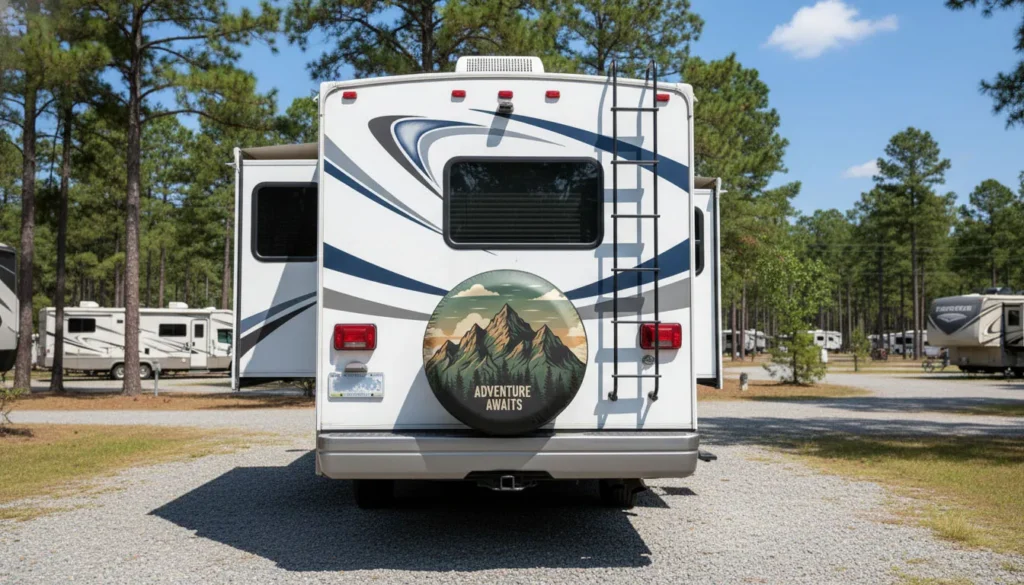
Spare tire covers for RV worth it — this is one of the most common questions RV owners ask before making a purchase decision. The honest answer, for most RV setups, is unambiguous: spare tire covers for RV are absolutely worth the investment, and the reasons go well beyond appearance.
This guide explains exactly why spare tire covers for RV are worth it, what specific risks they protect against, how they save money over time, and what to look for when choosing the right cover for your motorhome, travel trailer, or fifth wheel.
Why Spare Tire Covers for RV Use Are More Important Than for Other Vehicles
RV spare tires face a combination of threats that is more severe than almost any other vehicle category:
Threat 1: Prolonged Outdoor Exposure
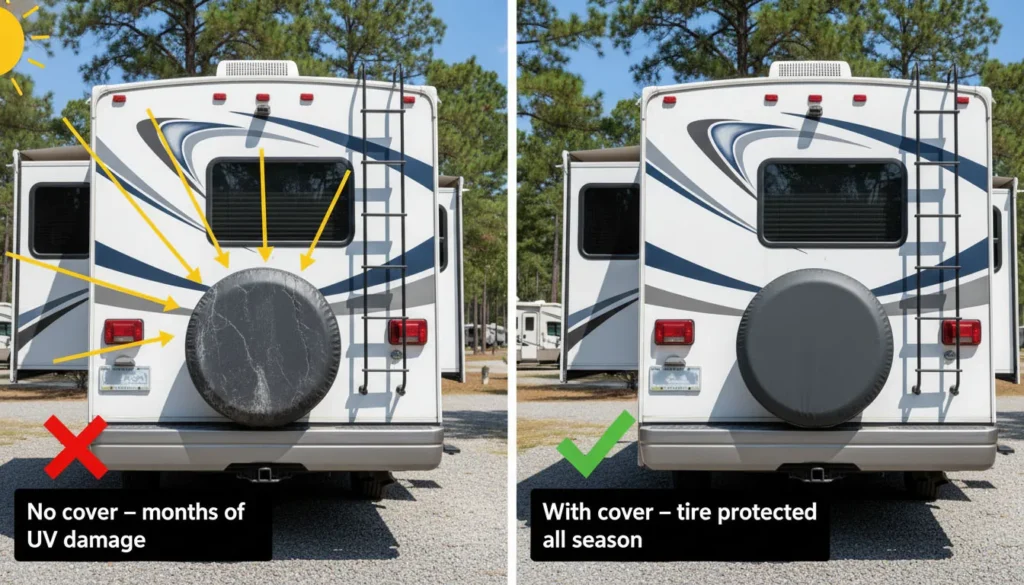
Unlike daily-driven vehicles that are regularly used and sometimes garaged, RVs frequently sit parked outdoors for extended periods — weeks, months, or entire off-seasons. During these periods, the spare tire accumulates continuous UV radiation, temperature cycling, moisture exposure, and oxidation without the circulation and movement of regular use that helps maintain rubber compounds.
A spare tire that sits exposed and motionless for six months accumulates more UV damage than a daily-driven vehicle’s spare tire does in two to three years. This dramatic difference in exposure intensity is the core reason why spare tire covers for RV are worth it in a way that is especially compelling compared to other vehicle types.
Threat 2: High Replacement Cost
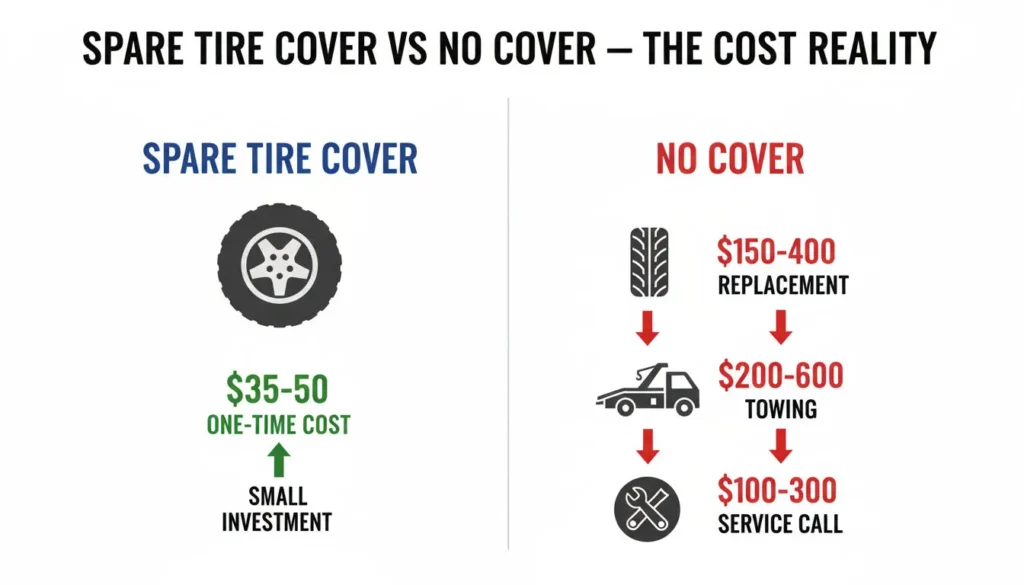
RV and trailer tires are significantly more expensive to replace than standard passenger car tires. Depending on the size, load rating, and brand, RV tires can cost $150–$400 or more per tire. A spare tire that has been degraded by UV exposure and needs premature replacement represents a significant unnecessary expense — one that a spare tire cover costing a fraction of that amount could have prevented.
Threat 3: Safety Criticality of the Spare
For RV owners who travel long distances on highways and in remote areas, the spare tire is a critical safety component. A flat tire on a highway in a rural area with a degraded, UV-damaged spare is a genuinely dangerous situation. A spare tire that has been properly protected and maintained is in a significantly better state of reliability when that moment comes.
What Spare Tire Covers for RV Actually Protect Against
UV Radiation Protection
Ultraviolet radiation causes photo-oxidation in rubber — a chemical process that breaks down the polymer chains that give rubber its flexibility and strength. The visible signs of UV damage — cracking, checking, and surface hardening — indicate structural degradation that has already occurred. A UV-resistant spare tire cover prevents this damage from accumulating in the first place.
For RVs stored outdoors during off-seasons, UV protection is the single most valuable benefit a spare tire cover for RV provides. In regions with intense UV levels — the American Southwest, Florida, California, and Texas — this protection is especially significant.
Ozone Resistance
Ground-level ozone — present in higher concentrations in urban areas and during summer months — attacks rubber compounds and accelerates cracking. Spare tires that are stationary and unused are more vulnerable to ozone damage than tires in regular use because the flexing of a tire during driving helps maintain rubber elasticity. A cover provides a barrier between the tire surface and ambient ozone.
Moisture and Temperature Protection
RVs stored outdoors experience significant temperature swings — particularly in spring and fall — that stress rubber compounds through repeated expansion and contraction. Moisture from rain, morning dew, and humidity penetrates surface cracking and accelerates degradation. A properly fitted cover reduces both moisture contact and the temperature extremes the tire surface experiences.
Physical Contamination Protection
Bird droppings, tree sap, industrial fallout, and road chemicals all degrade rubber surfaces when left in contact over extended periods. RV spare tires stored under trees or in areas with environmental contamination are particularly vulnerable. A cover keeps the tire surface clean and protected from these chemical threats.
The Cost Math: Are Spare Tire Covers for RV Worth It Financially?
The financial case for spare tire covers for RV worth it analysis is straightforward:
| Item | Cost |
|---|---|
| Quality spare tire cover for RV | $30–$50 one-time cost |
| RV / trailer tire replacement (per tire) | $150–$400+ |
| Roadside assistance call for flat in remote area | $100–$300+ |
| Towing if spare is unusable | $200–$600+ |
A spare tire cover that extends the spare tire’s service life by even one to two years more than justified its cost. A cover that prevents a roadside emergency caused by a degraded spare represents savings that dwarf its purchase price many times over.
From a purely financial standpoint, spare tire covers for RV are worth it in almost every scenario where the RV spends any meaningful time parked outdoors.
Choosing the Right Spare Tire Cover for Your RV
Get the Size Right First
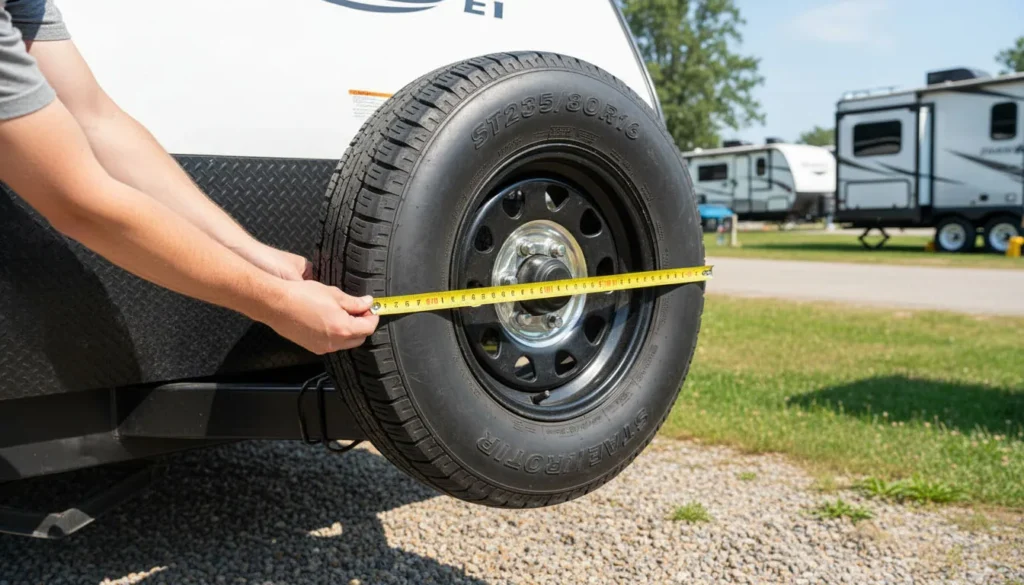
The most important factor in choosing a spare tire cover for your RV is getting the size correct. RV and trailer tires use ST (Special Trailer) designations and come in a range of sizes. Common RV spare tire cover sizes include:
| RV / Trailer Type | Common Tire Code | Cover Size |
|---|---|---|
| Small travel trailer | ST205/75R15 | 27″ |
| Mid-size travel trailer | ST225/75R15 | 28″ |
| Large travel trailer | ST235/80R16 | 30″ |
| Fifth wheel trailer | ST235/85R16 | 31″ |
| Class B / C motorhome | 225/75R16 or 235/80R17 | 28″ or 32″ |
Always measure your specific spare tire directly before ordering. RV and trailer tires vary significantly, and the correct size for your specific setup is determined by measurement, not assumption.
Material Quality Matters More for RV Use
For RV applications where the cover may be left in place for months at a time, material quality is especially important. Look for:
- UV-treated polyester fabric — resists UV degradation over extended exposure periods
- Water-resistant coating — prevents moisture penetration during rain and dew
- Dye-sublimation printing — maintains color and design integrity over seasons of outdoor use
- Reinforced drawcord — stays secure during wind and does not loosen over time
Snug Fit Is Critical for Long-Term Storage
For RV spare tires that are covered and left for extended periods, a snug fit matters more than for daily-driven vehicles. A loose cover can:
- Allow wind to get underneath and cause flapping that wears out both the cover and the tire surface
- Trap moisture between the cover and the tire, defeating the moisture protection purpose
- Shift out of position, leaving sections of the tire exposed
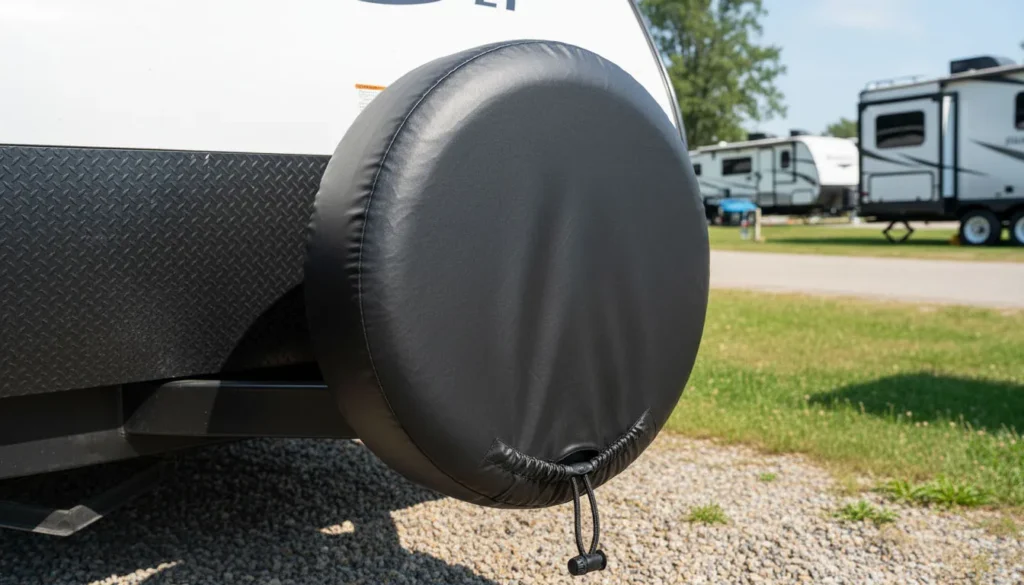
Choose the exact matching size for your tire rather than sizing up when selecting a cover for long-term RV storage use.
Frequently Asked Questions
How long should a spare tire cover last on an RV stored outdoors?
A high-quality UV-resistant spare tire cover on an RV stored outdoors typically lasts 3–5 years before showing significant wear. In hot, sunny climates — particularly the American Southwest — the shorter end of this range is more common. Regular cleaning and periodic inspection extend the cover’s lifespan and ensure it continues to provide effective protection.
Should I remove the spare tire cover when driving the RV?
No — spare tire covers are designed to stay in place during highway driving. A properly fitted cover with a secured drawcord will not come loose at normal highway speeds. Removing and reinstalling the cover repeatedly causes unnecessary wear and reduces its lifespan.
Do I need a camera hole on my RV spare tire cover?
Most RV and trailer spare tires do not have backup cameras mounted through them. RV backup cameras are typically mounted on the roof, rear bumper, or tailgate rather than through the spare tire. Stand behind your RV and visually confirm whether a camera lens is visible through the center of the spare before selecting the camera hole option at checkout.
Can I leave a spare tire cover on during winter storage?
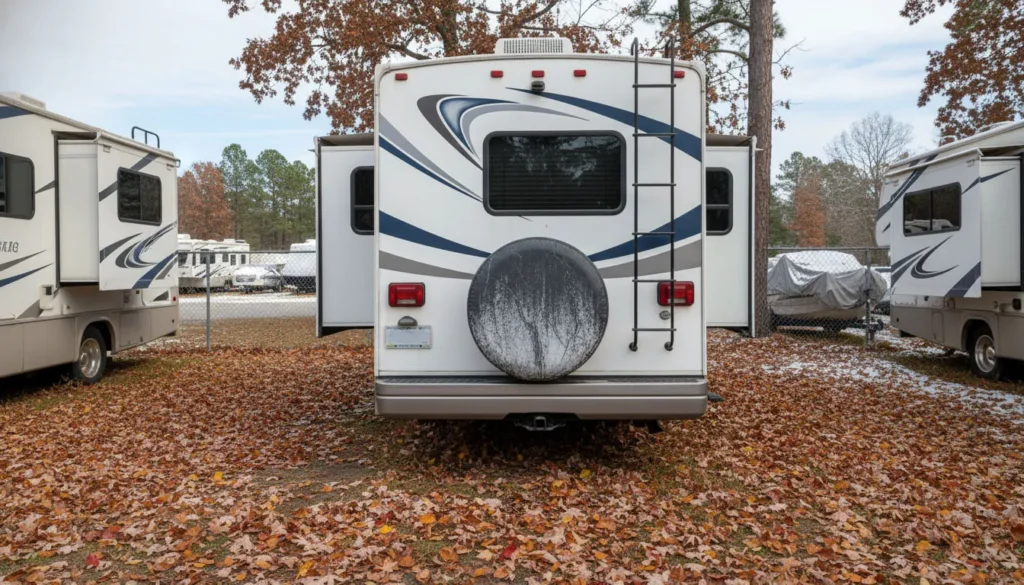
Yes — and for RVs stored outdoors during winter, the cover should absolutely be left on. Winter storage exposes the tire to temperature extremes, moisture from snow and ice, and UV radiation that continues even in winter months. The cover provides protection against all of these threats throughout the storage period.
What is the most common spare tire cover size for travel trailers?
The most common spare tire covers for RV travel trailer setups fall in the 27″–31″ range. Small to mid-size travel trailers typically use 27″ or 28″ covers, while larger travel trailers and fifth wheels more often use 30″ or 31″. Always measure your specific tire to confirm before ordering.
Final Thoughts
Spare tire covers for RV are worth it — clearly and without qualification for most RV setups. The combination of prolonged outdoor exposure, high tire replacement costs, and the safety criticality of the spare makes protective covers a practical investment that pays for itself many times over in extended tire life and prevented roadside emergencies.
Choose the correct size, select UV-resistant materials, ensure a snug fit, and your spare tire cover will protect your RV spare through seasons of outdoor storage and thousands of miles of highway travel.
For a complete guide to spare tire covers for Jeep, SUV, and RV owners — including sizing guidance, material comparisons, and buying tips — read our full guide below.
👉 Complete Guide to Spare Tire Covers for Jeep, SUV & RV
For RV tire safety and maintenance standards, refer to the NHTSA tire safety guidelines — the official U.S. government resource for tire maintenance and vehicle safety.
Ready to protect your RV spare tire? Browse our full collection of custom spare tire covers for RVs and trailers, available in sizes 27″–35″.