
Buying Guides, Vehicle Guides
How to Check If Your Vehicle Needs a Camera Hole: The Proven Guide
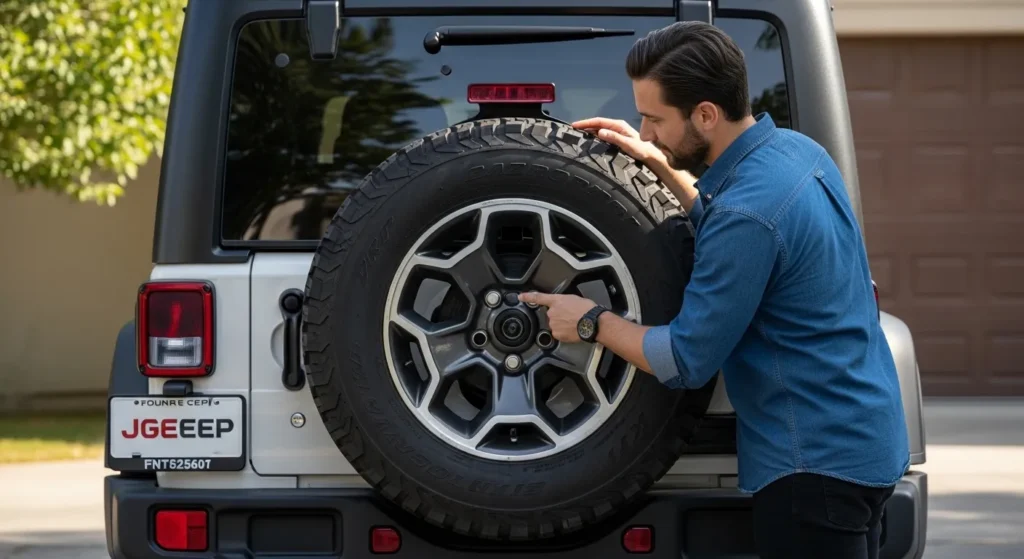
Jun
Knowing how to check if your vehicle needs a camera hole in a spare tire cover is one of the most important steps before placing your order — and it is also one of the easiest. The check takes under 60 seconds, requires no tools, and eliminates one of the most common and frustrating ordering mistakes: choosing the wrong camera hole option and blocking a backup camera or creating an unnecessary opening in an otherwise perfect cover.
This guide shows you exactly how to check if your vehicle needs a camera hole, what you are looking for, which vehicles most commonly require this option, and what to do if you are still uncertain after the visual check.
Why Checking If Your Vehicle Needs a Camera Hole Matters
The camera hole option on a spare tire cover is a binary choice — with camera hole, or without camera hole — and choosing incorrectly produces one of two problems:
- Choosing No Camera Hole when your vehicle needs one: The cover completely blocks your rear backup camera. You lose all rear camera visibility, parking guidelines disappear from your screen, and reversing safely becomes significantly more difficult. This is a genuine safety issue that makes the cover unusable on your vehicle as ordered.
- Choosing With Camera Hole when your vehicle does not need one: The cover has an unnecessary opening in the center. While this does not prevent the cover from functioning, it slightly reduces weather protection and creates an opening that looks out of place on a vehicle without a spare-tire-mounted camera.
Because spare tire covers are custom-made to order, the camera hole selection cannot be changed after the order is placed. Getting it right before checkout is the only reliable solution — which makes knowing how to check if your vehicle needs a camera hole an essential pre-order step.
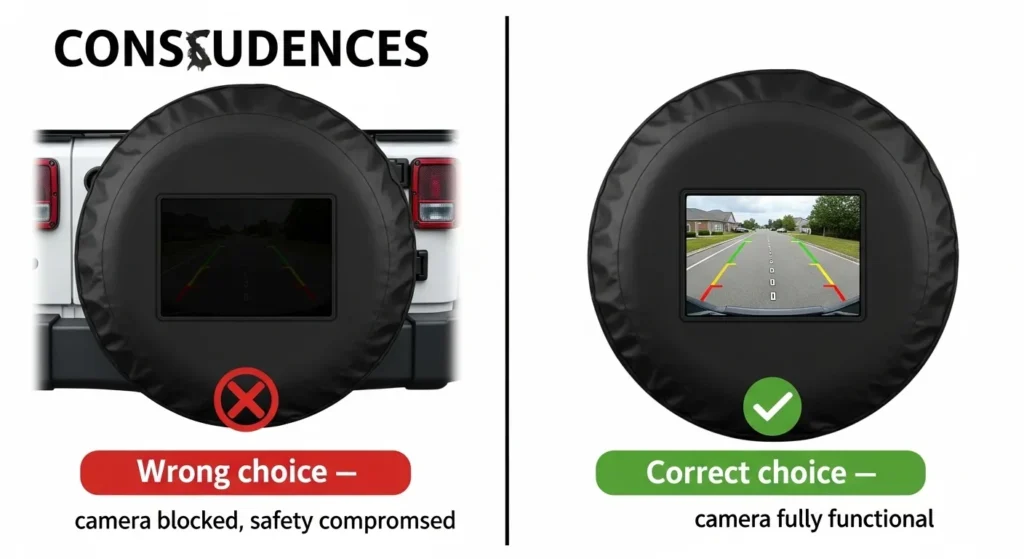
How to Check If Your Vehicle Needs a Camera Hole: Step-by-Step
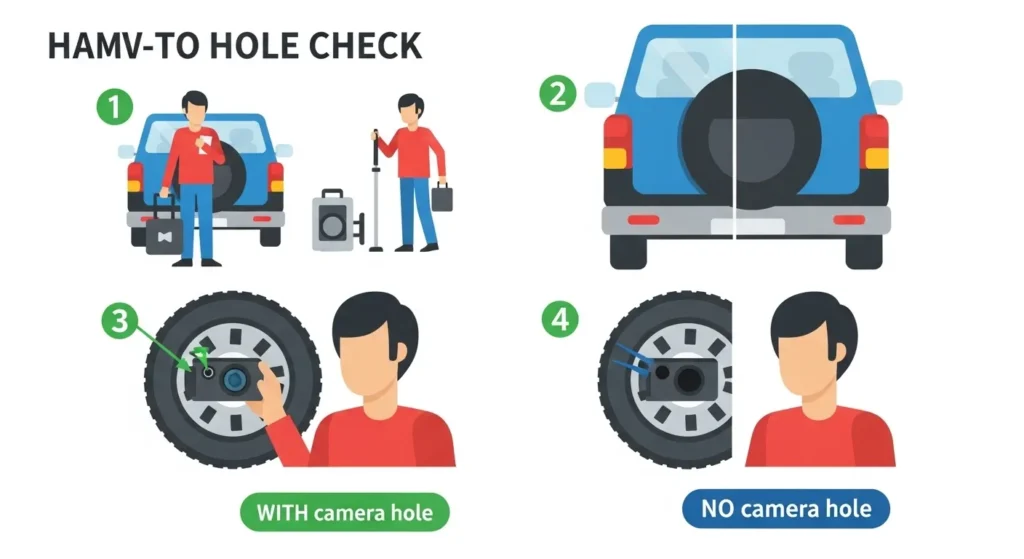
This check takes under 60 seconds and gives you a definitive answer for the vast majority of vehicles:
Step 1: Park the Vehicle and Stand Directly Behind It
Position yourself directly behind the vehicle — not at an angle — at a comfortable distance that allows you to see the entire rear of the spare tire clearly. The spare tire should be at roughly eye level or slightly below depending on vehicle height.
Step 2: Look at the Center of the Spare Tire
Focus your attention on the center of the spare tire — the hub area directly in the middle of the tire face. This is where a rear backup camera would be mounted if the vehicle has one integrated through the spare tire.
Step 3: Look for a Camera Lens
What you are looking for is a small camera lens — typically a circular or rectangular module, often surrounded by a small housing — visible through or mounted through the center of the spare tire. It may be:
- A small circular lens approximately 10–20mm in diameter
- A rectangular camera module in a housing
- Sometimes covered by a small protective cap that opens when the camera is activated
Step 4: Interpret What You See
- Camera lens visible through center of spare tire → Choose With Camera Hole
- No camera lens visible through spare tire → Choose No Camera Hole
That is the complete check. In most cases, the result is immediately obvious — either there is a camera lens there or there is not.
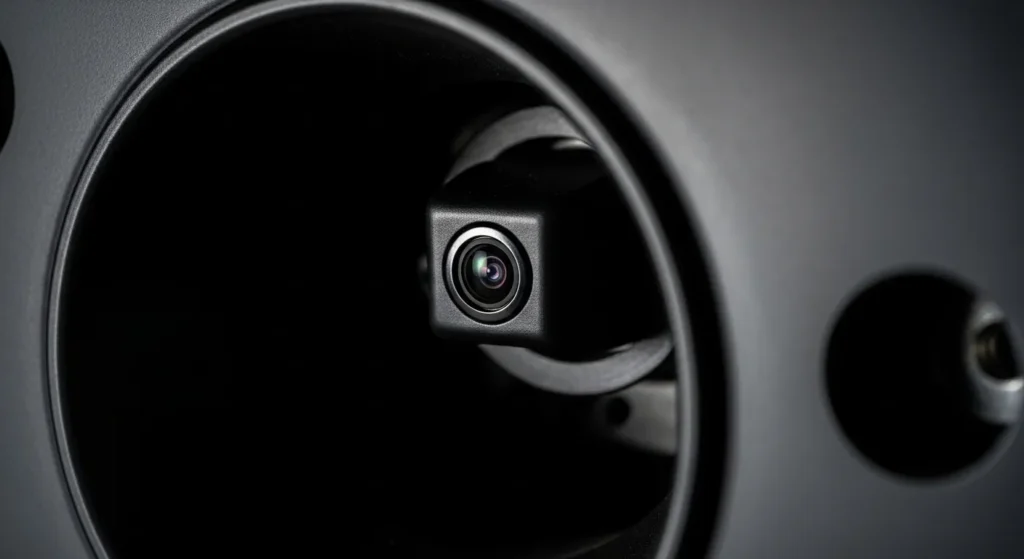
What a Spare-Tire-Mounted Backup Camera Looks Like
Many buyers are uncertain what they are looking for during the visual check. Here is a more detailed description of what a spare-tire-mounted backup camera looks like:
- It is typically positioned at or near the center of the spare tire, in the hub area
- On Jeep Wrangler models, the camera housing is often integrated into the spare tire carrier assembly and the lens faces rearward through the tire center
- The lens itself is small — typically 10–20mm in diameter — and may have a slight fisheye curvature visible on close inspection
- Some cameras have a small black or dark gray housing surrounding the lens
- Some cameras are covered by a protective flap or cover that opens automatically when reverse gear is engaged
If you see any of these elements through the center of your spare tire, your vehicle has a spare-tire-mounted camera and you need the With Camera Hole option.
Vehicles That Commonly Need a Camera Hole
While the visual check is always the definitive method, knowing which vehicles commonly have spare-tire-mounted cameras helps set expectations before you perform the check:
Jeep Wrangler (Most Common)
The Jeep Wrangler is the vehicle most commonly associated with spare-tire-mounted backup cameras. Many JK models from 2013 onward and virtually all JL models (2018–present) with backup camera equipment have the camera mounted through the spare tire carrier on the rear tailgate. If you own a Wrangler with a backup camera, there is a high probability that a camera hole is needed — but always confirm with the visual check, as some trim levels and aftermarket configurations differ.
Other Vehicles
Some other vehicles have rear-mounted spare tires with integrated cameras, though this configuration is far less common outside the Jeep Wrangler lineup. Ford Bronco models, some Land Rover configurations, and certain other SUVs with rear-door-mounted spare tires may have cameras in this position. Always check visually regardless of vehicle type.
Vehicles That Typically Do NOT Need a Camera Hole
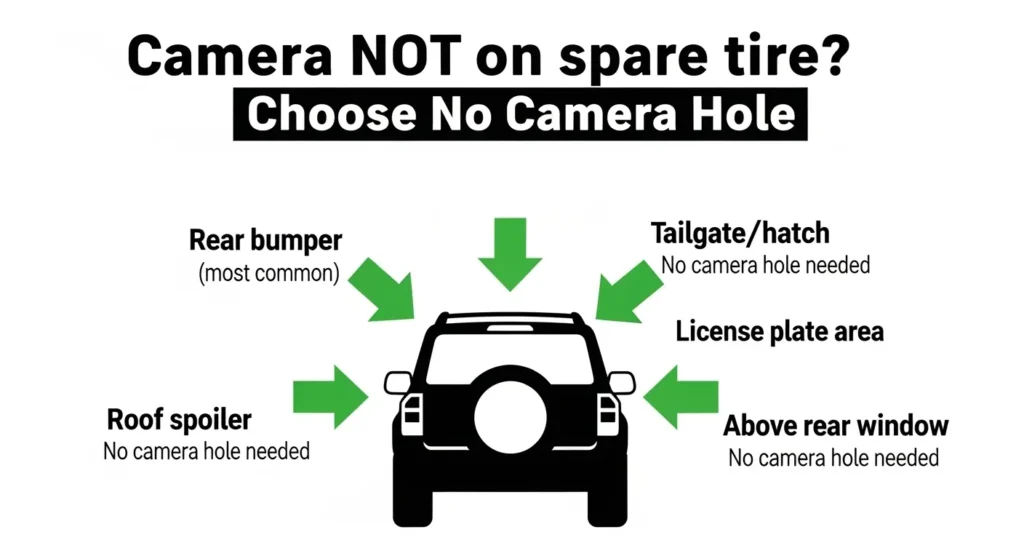
The majority of vehicles with backup cameras do not have the camera mounted through the spare tire. Common alternative camera positions include:
- Rear bumper: Most common position on modern vehicles
- Tailgate or rear hatch: Common on SUVs and pickup trucks
- License plate area: Common on cars and smaller SUVs
- Roof spoiler: Used on some models for wider field of view
- Above rear window: Common on some SUV models
If your vehicle’s backup camera is in any of these positions — rather than through the spare tire — you do not need a camera hole in your spare tire cover. Choosing No Camera Hole gives you a cleaner, seamless appearance with complete coverage across the tire face.
What to Do If You Are Still Uncertain
The visual check is definitive for most vehicles — but occasionally buyers remain uncertain, particularly with vehicles that have complex spare tire carrier assemblies or protective covers over the camera housing. If you are still unsure after performing the visual check:
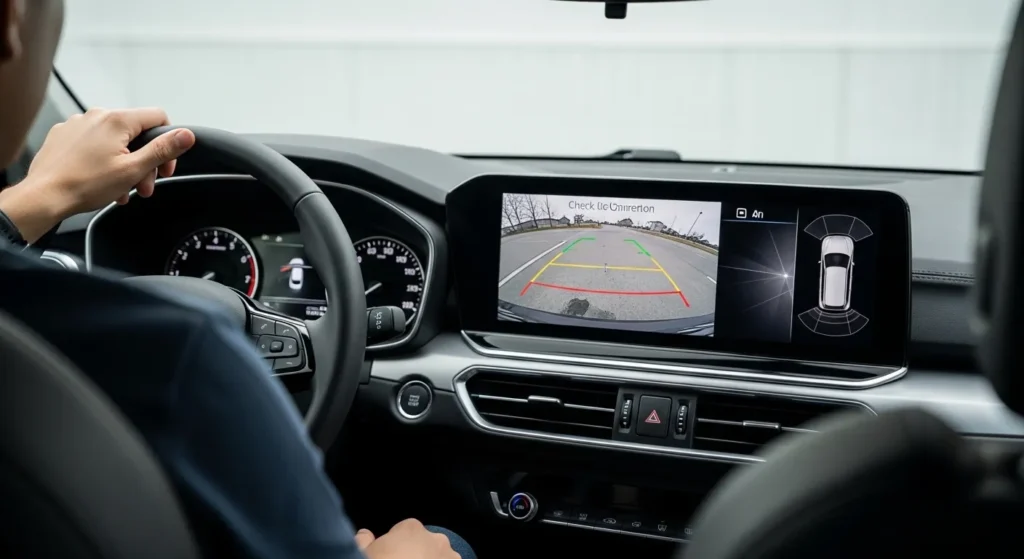
- Activate the backup camera. Put the vehicle in reverse and watch the screen. If you have a backup camera and it functions normally with the current spare tire in place, a camera hole in the cover will be needed to maintain that function. Note where the camera image appears to originate — if it clearly comes from the rear bumper or tailgate rather than the spare tire, no camera hole is needed.
- Check your owner’s manual. Look for “backup camera” or “rear camera” in the index. The manual typically describes camera location and may specify whether it is integrated into the spare tire carrier.
- Search your specific vehicle model and year. A quick search for “[your vehicle] backup camera location” will typically produce clear answers for your specific model and trim level.
- Contact support before ordering. If uncertainty remains after all of the above, contact TireCoverPrint.com support with your vehicle’s year, make, model, and trim level before placing your order. This takes minutes and prevents a frustrating compatibility issue after the cover has been produced.
Does the Camera Hole Affect Cover Size or Fit?
No — the camera hole selection has absolutely no effect on the size or fit of the spare tire cover. Cover sizing is determined entirely by the tire’s overall diameter and width. The camera hole is a separate option that determines compatibility with your vehicle’s backup camera system.
You choose two independent things when ordering:
- Size — based on your tire’s measured diameter
- Camera hole option — based on your vehicle’s camera configuration
Getting both right ensures a cover that fits perfectly and is fully compatible with your vehicle’s systems.
Frequently Asked Questions
What happens if I order No Camera Hole but my vehicle needs one?
The cover will completely block your rear backup camera — you will have no camera image when reversing. Because spare tire covers are custom-made to order, the camera hole option cannot be added after the fact. If you have already ordered incorrectly, contact TireCoverPrint.com support to discuss options before the order is produced.
Can I add a camera hole myself after receiving the cover?
Cutting a camera hole yourself is not recommended. Factory camera holes are reinforced at the edges to maintain structural integrity and a clean, even opening. DIY cuts typically produce uneven edges, fraying, and reduced structural integrity around the opening. The correct approach is to select the right camera hole option before ordering.
My Jeep Wrangler JL has a backup camera but I cannot see it on the spare tire. Do I need the camera hole?
On JL Wranglers, the camera is often integrated into the spare tire carrier assembly and may not be immediately visible without looking closely. Perform the visual check carefully — look specifically at the hub area of the spare tire for any small lens or housing. If your JL has a backup camera function that currently works, the camera is almost certainly mounted through the spare tire, and you need the With Camera Hole option.
I have two Jeeps — one needs a camera hole and one does not. Can I use the same cover on both?
No — a cover with a camera hole will leave an unnecessary opening when used on the vehicle that does not need one, and a cover without a camera hole will block the camera on the vehicle that does need one. When vehicles have different camera hole requirements, separate covers are needed for each.
Final Thoughts
Knowing how to check if your vehicle needs a camera hole is the simplest and most important pre-order check you can perform. Stand behind the vehicle, look at the center of the spare tire, and confirm whether a camera lens is present. The result of this 60-second check determines one of the two key selections in the ordering process — and getting it right ensures your cover is fully compatible with your vehicle from the moment it arrives.
For the complete guide to camera hole options — including which vehicles need them, pros and cons of each choice, and full compatibility guidance — read our full guide below.
👉 With or Without Camera Hole? Which Spare Tire Cover Do You Need?
For vehicle safety and backup camera standards, refer to the NHTSA backup camera safety guidelines — the official U.S. government resource for backup camera safety standards.
Ready to order the right cover for your vehicle? Browse our full collection of custom spare tire covers, available with or without camera hole options in sizes 27″–35″.